

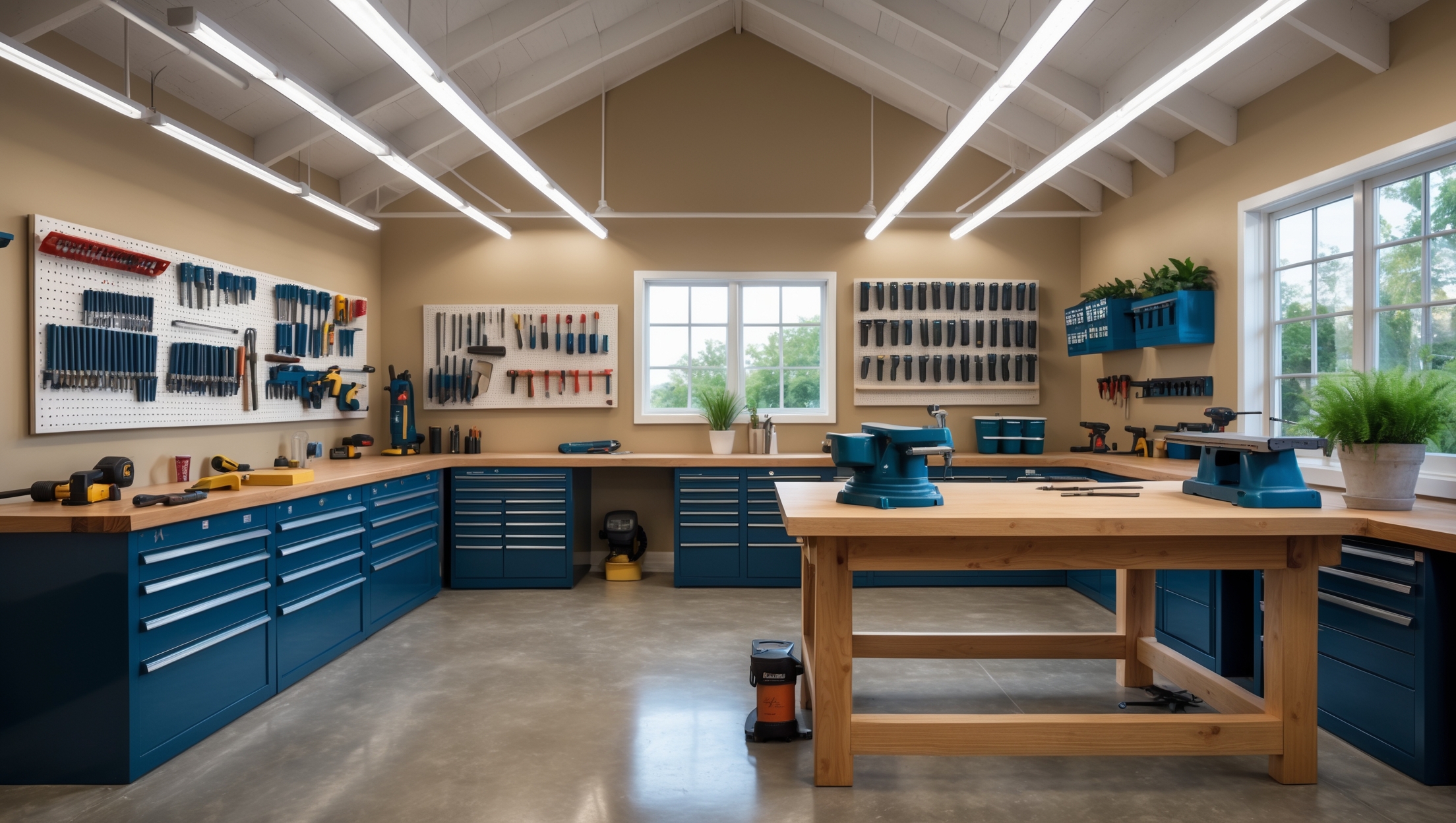
Introduction: Why Tool Storage Matters in Your Home Workshop
Every home improvement enthusiast knows the frustration of searching for a misplaced tool in the middle of a project. Cluttered workspaces slow you down, increase the risk of accidents, and can even damage your tools. Whether you’re a weekend DIYer or a seasoned renovator, a well-organized workshop is the backbone of successful home improvement. Proper tool storage goes beyond simply tidying up — it’s about creating an efficient, safe, and enjoyable environment where you can work at your best. In this guide, we’ll dive deep into practical tool storage solutions for home workshops, covering everything from wall systems and mobile carts to creative space-saving ideas. We’ll break down costs, discuss essential safety considerations, and help you design a system that fits your unique needs and budget. By the end, you’ll have the knowledge and inspiration to transform your workshop into an organized powerhouse that fuels creativity and productivity.
Assessing Your Storage Needs
Inventory Your Tools
Start by listing every tool you own, from power tools and hand tools to small hardware and accessories. Group them by frequency of use and size. This inventory forms the foundation for designing your storage system — you can’t organize what you don’t know you have.
- Daily-use tools: Hammers, screwdrivers, tape measures, cordless drills
- Occasional-use tools: Specialty saws, sanders, plumbing wrenches
- Rarely-used items: Seasonal or project-specific tools
Workshop Space Audit
Measure your available space, including wall height, floor area, and potential ceiling storage. Note electrical outlets, windows, and doors—these will affect where you can place storage systems and workbenches. Sketch a simple floor plan to visualize possible arrangements.
Wall-Mounted Storage Solutions
Pegboards: Versatile and Customizable
Pegboards are a classic and cost-effective way to keep tools visible and accessible. Available in metal, plastic, or traditional hardboard, pegboards can be cut to fit any wall. Use a variety of hooks, bins, and shelves to accommodate different tool shapes and sizes.
- Pros: Easy to rearrange, maximizes wall space, instant tool visibility
- Cons: Limited weight capacity, best for hand tools
- Cost: $20–$100+ depending on material and size
French Cleat Systems: Modular and Sturdy
French cleats are angled wooden strips attached to the wall, allowing you to hang custom tool holders, cabinets, or bins. This system offers more strength than pegboards and is perfect for heavier or bulkier tools. You can build cleats yourself or buy pre-made systems.
- Pros: Highly customizable, supports heavy loads, adaptable as your needs change
- Cons: Requires more initial setup and woodworking skills
- Cost: DIY for under $50, commercial systems $100–$300+
Slatwall Panels: Professional-Grade Flexibility
Common in commercial settings, slatwall panels are grooved boards that accept specialized hooks, baskets, and shelves. They’re durable, stylish, and can transform a cluttered wall into an organized masterpiece.
- Pros: High weight capacity, sleek appearance, endless accessory options
- Cons: More expensive, requires precise installation
- Cost: $100–$500 depending on coverage area
Cabinets and Drawers: Secure, Dust-Free Storage
Freestanding Metal Tool Cabinets
Rolling tool cabinets offer lockable, dust-free storage for expensive power tools and hand tools. Look for features like ball-bearing drawers, sturdy wheels, and integrated organizers. These are a smart investment for serious DIYers.
- Pros: Secure, mobile, protects tools from dust and moisture
- Cons: Takes up floor space, can be expensive
- Cost: $150–$1500, depending on size and quality
Wall Cabinets and Overhead Storage
Install cabinets above your workbench or along unused wall space. Overhead storage racks can hold seasonal items or tool cases. Make sure all cabinets are securely fastened to wall studs for safety.
- Pros: Maximizes vertical space, keeps tools out of sight
- Cons: Harder to access frequently-used items
- Cost: $50–$400 per cabinet
Drawer Organization Systems
Use foam inserts, modular dividers, or custom cutouts to keep drawers neat. Label each section for quick access. This is especially useful for small hardware, drill bits, and precision tools.
- Pros: Prevents tool damage, speeds up workflow
- Cons: Initial setup can be time-consuming
- Cost: $10–$100 per drawer
Mobile Storage Solutions: Flexibility on the Move
Tool Carts and Trolleys
Mobile carts are ideal for moving tools between different work areas or projects. Look for sturdy wheels, locking brakes, and customizable trays or bins. Some carts include integrated charging stations for cordless tool batteries.
- Pros: Enhances workflow, adaptable, reduces back-and-forth trips
- Cons: Requires parking space, can become cluttered if overloaded
- Cost: $50–$400
Portable Toolboxes and Organizers
Stackable toolboxes, modular cases, and organizer trays make it easy to transport tools to job sites or around the house. Invest in waterproof, impact-resistant models for valuable or delicate equipment.
- Pros: Portable, protects tools, useful for small spaces
- Cons: Limited capacity, can become heavy
- Cost: $20–$200 per unit
Creative Storage Hacks for Small Workshops
Magnetic Tool Holders
Magnetic strips mounted on the wall are perfect for screwdrivers, pliers, and drill bits. They save drawer space and keep metallic tools within easy reach.
Under-Shelf Bins and Hanging Jars
Attach small bins or clear jars underneath shelves to store screws, nails, and other hardware. Label each container for instant identification.
PVC Pipe Tool Holders
Use short sections of PVC pipe to create custom holders for screwdrivers, chisels, or even power tool cords. Mount them on the wall or inside cabinet doors.
Folding Workbenches and Drop-Down Tables
If space is at a premium, a folding workbench or drop-down table offers a sturdy surface when you need it, and folds away when you don’t. Store slimline tool racks behind the bench for added efficiency.
Labeling and Inventory: Keeping Track of Your Tools
Label Everything
Consistent labeling is the secret to a truly organized workshop. Use a label maker or adhesive tags for drawers, bins, and shelves. For quick reference, consider color-coding by tool type or frequency of use.
Digital Tool Inventory Apps
Keep a digital record of your tools using inventory apps. These apps can track tool locations, maintenance schedules, and even warranty information. Some popular options include Sortly, ToolWatch, and custom spreadsheets.
Safety and Maintenance Considerations
Safe Tool Placement
Always store sharp or heavy tools below shoulder height to reduce the risk of injury. Lock away hazardous tools and chemicals, especially if children have access to your workshop. Avoid stacking items above eye level unless they are lightweight and infrequently used.
Fire and Electrical Safety
- Keep flammable materials in metal safety cabinets
- Do not overload electrical outlets; use surge protectors for charging stations
- Install a smoke detector and keep a fire extinguisher within reach
Tool Maintenance Zones
Designate a small area for tool cleaning, oiling, and repairs. Keep lubricants, brushes, and cleaning cloths handy. Regular maintenance extends the life of your tools and keeps them performing safely and efficiently.
Cost Breakdown and Budgeting
Starter Budget ($100–$300)
- Pegboard or basic French cleat system
- Stackable plastic bins and a budget toolbox
- Inexpensive shelving units
Mid-Range Investment ($300–$1000)
- Rolling tool cabinet
- Wall cabinets or slatwall panels
- Magnetic tool holders and custom drawer organizers
Premium Workshop ($1000+)
- High-end modular storage systems
- Custom-built workbench with integrated storage
- Commercial-grade wall panels and mobile tool carts
Maintenance Best Practices for Your Storage System
Regular Decluttering
Set aside time each season to review your storage system. Donate or sell unused tools, discard broken items, and reorganize as needed. This prevents clutter from creeping back in and keeps your workspace efficient.
Check for Wear and Tear
Inspect shelves, hooks, and cabinets for signs of damage or instability. Tighten screws, replace worn components, and ensure all storage units are securely anchored.
Adapt as Your Needs Change
Your tool collection and project types will evolve over time. Choose modular or flexible storage solutions that can be rearranged or expanded as needed.
Conclusion: Transforming Chaos into Creativity
An organized workshop is more than just a tidy space — it’s a catalyst for creativity, efficiency, and safety. By investing time and thought into your tool storage solutions, you set yourself up for smoother projects and more enjoyable DIY experiences. Whether you choose affordable pegboards or a custom modular system, the key is to tailor your storage to your specific tools, workflow, and available space. Don’t overlook the importance of labeling, regular maintenance, and adapting your setup as your needs evolve. Remember, an efficient workshop isn’t built in a day; it’s an ongoing process of improvement. Start with small changes, and you’ll quickly see the benefits: less wasted time, fewer misplaced tools, and a workspace that inspires your best work. Take the leap—organize your tools today, and unlock the full potential of your home workshop.
When categorizing tools into daily-use, occasional, and rarely-used, how would you recommend storing seasonal tools that are bulky but only used once or twice a year? Should they go in a separate area, or is there a way to integrate them into the main workshop storage without causing more clutter?
For bulky, rarely-used seasonal tools, it’s practical to store them in a separate area, such as overhead shelves, garage lofts, or storage closets, rather than in your main workshop space. This keeps your daily and occasional tools easily accessible and your workspace clutter-free. Try labeling storage bins or shelves for easy retrieval when the season comes around.
When you group tools by frequency of use as you suggested, do you find it more efficient to keep daily-use tools right on the benchtop or still hang them up on a pegboard for visibility? I’m trying to strike a balance between convenience and avoiding clutter.
Both approaches have their benefits. Keeping daily-use tools on the benchtop offers maximum convenience, but it can lead to clutter if space is tight. Using a pegboard for these frequently used tools keeps them visible and accessible without taking up work surface area, which helps maintain an organized workspace. You might try a mix: hang essentials you reach for constantly, and keep only the absolute must-haves on the benchtop.
How should I prioritize my spending if I have a tight budget? For instance, is it better to invest in wall-mounted solutions first or mobile carts?
If your budget is limited, start with wall-mounted solutions like pegboards or shelves. These are usually more affordable and make use of vertical space, keeping your tools visible and accessible. You can add a mobile cart later if you find you need more flexibility or have tools you frequently move around. This approach gives you a solid foundation without overspending.
The article talks about wall-mounted storage and mentions pegboards as a classic solution. Can you compare pegboards to slatwall systems in terms of installation difficulty, durability, and flexibility for changing tool arrangements over time?
Pegboards are usually easier and quicker to install, needing just some screws or wall anchors. Slatwall systems take more time and may require cutting panels to fit, but they cover larger areas smoothly. In terms of durability, slatwall is sturdier, especially for heavy tools. For flexibility, both let you move hooks, but slatwall has more accessory options and supports larger shelves or bins, making it more versatile for changing tool setups.
You suggest sketching a floor plan before setting up tool storage. Can you share examples of common mistakes people make during this step, or what to watch out for so I don’t end up having to redo my layout?
When sketching your workshop floor plan, common mistakes include underestimating space needed for movement, not allowing enough clearance around workbenches, and forgetting about door swing or window access. People also often overlook electrical outlet placement or lighting needs. Be sure to visualize the flow between stations and leave space for future tool additions. Double-check measurements and consider how you’ll move larger materials through the space.
Could you share more details on how to estimate the costs for setting up a decent wall system versus mobile carts? I’m on a pretty fixed budget and want to avoid overspending while still keeping my tools organized.
To estimate costs, start by listing your required storage features (shelves, pegboards, bins). For wall systems, factor in the price of panels, hooks, and installation hardware—these can range from $75 to $300 depending on size and quality. Mobile carts typically cost $50 to $250 based on material and drawer count. Compare prices at local stores and online, and consider secondhand options. Prioritize essentials first to stick to your budget.
When making that inventory of tools you mentioned, do you have a template or method for keeping it updated over time? I feel like I’ll forget what I have or where it’s stored if I don’t track it somehow.
A simple spreadsheet is a great way to keep your tool inventory organized and updated. List each tool, its location, and any notes about its condition. You can add columns for date of purchase or last use, too. Whenever you buy, lend, or move a tool, just update the sheet. Printing a copy for your workshop or using a cloud-based version can help you remember and keep things current.
When taking an inventory of tools as suggested, do you have any tips for efficiently keeping that list updated as new tools are added? I find my collection grows over time, and it gets tricky to maintain an accurate record.
To keep your tool inventory up to date, consider maintaining a digital list using a spreadsheet or a simple app on your phone. Each time you buy a new tool, quickly add it to the list before putting it away. Setting a monthly reminder to review and update your inventory can also help you stay organized as your collection grows.
You mentioned grouping tools by how often you use them when setting up storage. Do you have any tips on how to store rarely-used or seasonal tools so they don’t take up prime space but are still easy to find when I need them?
For rarely-used or seasonal tools, consider storing them in labeled bins or clear containers on higher shelves or in less accessible areas of your workshop. This keeps them out of the way but still organized. Be sure to label everything clearly and keep an updated inventory list, so you know exactly where each tool is when you need it. Rotating these items seasonally can also help ensure the most relevant tools are always within easy reach.
In your guide, you mention breaking down costs for different storage solutions. Could you give a rough estimate on what a basic wall-mounted pegboard setup might cost versus a mobile tool cart for a small workshop?
A basic wall-mounted pegboard setup for a small workshop usually costs around $25 to $60, depending on the size and included hooks or accessories. A mobile tool cart tends to be pricier, generally ranging from $60 for a simple model up to $150 or more for sturdier carts with multiple drawers. Prices can vary based on brand and features, but this should give you a general idea for budgeting.
When you mention grouping tools by frequency of use, do you have any tips for keeping daily-use tools super accessible without cluttering up the main workspace? I feel like my most-used tools always end up scattered even after organizing.
To keep your daily-use tools handy but organized, try mounting a pegboard or magnetic strip right above your main work area for those essential items. Another option is a small rolling cart or caddy that you can move around as needed and return to its spot after use. Designating a fixed ‘home’ for each tool helps prevent scattering and makes cleanup quicker.
You mention breaking down costs for different storage systems. Do you have estimates or guidelines for budgeting wall systems versus mobile storage solutions for a medium-sized workshop? I want to maximize efficiency without overspending.
For a medium-sized workshop, wall-mounted systems typically range from $200 to $600 depending on materials and features, while mobile storage units like rolling cabinets or tool chests usually cost between $150 and $500 each. To maximize efficiency, consider a mix of wall storage for frequently used tools and mobile units for flexibility. Setting an overall budget of $400–$900 should provide ample options without overspending.
How detailed should the workshop floor plan sketch be when auditing my space? I am not sure if I need to include things like outlets, or if a basic layout is usually enough for planning tool storage.
For planning your tool storage, a basic layout showing walls, doors, and major furniture is usually enough. However, including details like electrical outlets and windows can help you optimize tool placement, especially for power tools or workbenches. It’s not required, but a more detailed sketch can save you time and effort during setup.
When doing the inventory, how do you recommend handling all the little pieces like screws, nails, and bits that seem to get everywhere? Should those be included in the initial tool list or organized differently from larger tools?
Small items like screws, nails, and bits can be challenging to track, but they should definitely be included in your inventory. I recommend grouping them by type and size, then storing them in clearly labeled containers or drawer organizers. Rather than listing every single piece, you can count them in batches or by container. This keeps your inventory manageable while ensuring you always know what you have and where to find it.
I like the idea of starting with a full inventory of my tools, but I’m not sure how detailed I should get when listing small hardware and accessories. Do you have tips for organizing those tiny items so they don’t get lost in the shuffle?
For small hardware and accessories, it’s best to group similar items together rather than listing every single piece. Use divided containers, drawer organizers, or small bins to keep screws, nails, and other tiny items separated. Label each section for quick identification. Magnetic strips or clear jars can also help keep things visible and accessible without getting too overwhelming with details.
I noticed you said you’d break down costs, but roughly how much should I expect to spend on setting up a basic pegboard system versus mobile carts? I’m trying to organize on a tight budget.
For a basic pegboard setup, you can expect to spend around $30 to $60, depending on the size and number of hooks or accessories you add. Mobile carts generally cost more, usually ranging from $50 for simple plastic versions to $120 or more for sturdier metal ones. Pegboards are usually the more budget-friendly option if you’re organizing on a tight budget.
I’m just getting started organizing my workshop and I’m curious about how to decide what counts as a daily-use tool versus something used only occasionally. Do you have any tips for figuring this out, especially when I’m not sure how often I’ll use certain tools yet?
A helpful approach is to group tools by the types of projects you plan to tackle first. Place the tools you anticipate using for those projects within easy reach. As you work, pay attention to which tools you reach for most—these will naturally become your daily-use tools. For anything you’re uncertain about, keep them accessible but not in the prime spots, and adjust as your routines develop.
You mentioned breaking down costs for different storage setups. Do you have ballpark figures for setting up a basic system versus a more advanced one, especially for a small business owner on a tighter budget?
For a basic tool storage setup, like shelving units and pegboards, you might spend between $100 and $300, depending on size and material. A more advanced system with modular cabinets, specialized racks, and heavy-duty workbenches can range from $800 to $2,000 or more. For small business owners on a budget, starting with sturdy shelving and pegboards can offer good organization without a big upfront cost.
I like the idea of grouping tools by frequency of use, but I have limited wall space in my garage and a mix of large power tools and tiny hardware. Any specific storage setups you recommend for cramming everything into a tight space without losing accessibility?
For limited wall space, consider using a combination of vertical shelving units and stackable storage bins for small hardware. Mobile tool carts or rolling cabinets keep large power tools accessible and easy to move as needed. Pegboards with hooks can squeeze storage into narrow wall areas, while magnetic strips or drawer organizers work well for hand tools. This way, everything stays organized and easy to reach, even in a tight space.
I’m working with a small garage space and wondered how to balance storing power tools versus hand tools efficiently without things feeling cramped. Do you have any tips for blending wall-mounted systems like pegboards with mobile carts in really tight areas?
In a small garage, combining pegboards and mobile carts can really maximize your space. Mount a pegboard for your most-used hand tools above your workbench or along one wall to keep them visible and easy to grab. Use a slim, rolling cart for bulky power tools—just wheel it out when needed and tuck it away when not in use. Focus on vertical storage and keep only essentials out, rotating less-used tools as needed.
When you mention breaking down costs for storage solutions, could you give some ballpark price ranges for setting up things like wall-mounted pegboards versus mobile carts? I’m trying to figure out what’s most budget-friendly for a small apartment workshop.
Wall-mounted pegboards are often the most budget-friendly option, with basic setups ranging from $20 to $50 depending on size and quality. Hooks and accessories may add another $10 to $30. Mobile carts typically start around $40 for simple models and can go up to $150 or more for sturdier, larger versions. For a small apartment, pegboards usually take up less space and cost less overall.
You mentioned breaking down costs when designing a storage system. What are some budget-friendly options for someone who’s just starting out, especially if we don’t have the money for custom built-in systems or expensive wall racks?
If you’re just starting out, you can use pegboards, freestanding shelves, and stackable plastic bins as affordable storage solutions. Repurposing old cabinets or bookcases works well too. Magnetic strips are inexpensive for keeping tools visible, and you can even use labeled jars or containers for small items. These options keep costs low while still helping you stay organized.
When auditing workshop space and planning a layout, are there any tips for balancing safety with maximizing storage—like how close storage should be to outlets or the main workbench?
When planning your workshop layout, keep frequently used tools close to the main workbench for convenience, but avoid crowding outlets to reduce fire risk and maintain easy access. Leave enough clearance—at least 3 feet—around outlets and main walkways. Store heavier items lower to the ground to prevent accidents, and ensure emergency exits and electrical panels are never blocked by storage units.
After outlining the space and grouping tools by use, I’m still struggling with where to put rarely-used, bulky tools without them getting in the way. Do you have any creative storage ideas for these items, especially in a shop with limited ceiling space?
For rarely-used, bulky tools, try using under-bench storage or rolling carts that can slide beneath your work surfaces. Vertical storage along unused wall sections, like tall cabinets or pegboard with heavy-duty hooks, can also help without taking up ceiling space. Stackable bins or totes tucked under shelves work well for items you don’t need often and keep the floor clear.
You mentioned assessing available space, including the ceiling, for storage options. Have you tried any specific ceiling-mounted systems for things like lumber or seasonal tools? I’m curious how safe and practical those setups are for a typical garage workshop.
Ceiling-mounted storage can be a great way to maximize garage space, especially for items like lumber or seasonal tools. Common options include overhead racks and pulley systems. When installed properly into ceiling joists and with weight limits in mind, they’re safe and practical. Just make sure to follow manufacturer guidelines, avoid overloading, and keep frequently accessed items at an easy-to-reach height. Many people find these systems free up valuable floor and wall space in their workshops.
I noticed you mentioned breaking down costs for different storage systems. Could you provide some real-life examples of what a basic versus a more advanced workshop setup might cost, including pegboards and mobile carts?
A basic workshop setup might include a standard pegboard system for around $30–$50, plus a simple metal shelving unit for $60–$100, and a lightweight mobile cart for $50–$80. For a more advanced setup, heavy-duty modular cabinets can range from $400–$1,000, custom-fit pegboards with accessories could be $100–$200, and a professional-grade mobile tool chest could cost $300–$600. Prices vary based on materials and brands.
When you mention breaking down costs for different storage solutions, can you give some ballpark price ranges for wall systems versus mobile carts? I’m trying to set a realistic budget before reorganizing my workshop.
Wall-mounted storage systems can range from around $50 for basic pegboards and hooks up to $300 or more for larger modular setups with cabinets and bins. Mobile tool carts typically start at about $70 for a simple model and can go up to $400 or $500 for heavy-duty, multi-drawer carts. These are general ranges, but actual prices will depend on size, materials, and brand.
I see you suggest doing a full inventory of all your tools first. Do you have any tips for how to actually keep this list organized as tools come and go, or maybe apps that work well for tracking tool inventory in a home workshop?
To keep your tool inventory organized over time, consider using a simple spreadsheet or a dedicated inventory app. Apps like Sortly or MyStuff2 let you add photos, categories, and notes for each tool, and make updating your list easy as you buy new tools or retire old ones. If you prefer analog, a binder with printed lists works well, too—just be sure to update it regularly as your collection changes.
After doing a full tool inventory and sketching out my workshop floor plan, what’s the best way to decide which storage solutions should be prioritized first if I’m working with limited space and only want to buy a few new organizers at a time?
Since space is tight and you only want to add a few organizers at a time, start by focusing on the tools you use most often. Prioritize storage that keeps these essentials within easy reach, like wall-mounted racks for hand tools or a small rolling cart for power tools. This approach ensures your daily workflow improves immediately, while giving you flexibility to expand your storage as needed.
When doing the initial inventory and space audit, what’s the best way to decide how much storage to allocate for rarely-used tools versus daily-use ones? I’m worried about wasting space but also don’t want to lose track of less common tools.
To balance storage, first group your tools by how often you use them. Allocate easily accessible space, like pegboards or drawers near your workbench, for daily-use tools. For rarely-used tools, use labeled bins or shelves in less prominent areas. Make a simple inventory list, so you always know where infrequently used tools are stored, ensuring you don’t lose track while maximizing space for the items you use most.
When you mention grouping tools by how often you use them, do you have any practical tips for keeping daily-use tools super accessible without letting the workspace get cluttered again? I’d like ideas that work for a smaller garage setup.
For a small garage, a pegboard over your main workbench is a great way to keep daily-use tools visible and within reach without clutter. Magnetic strips can hold metal tools like screwdrivers and pliers. Use a portable tool caddy or a rolling cart for tools you use all the time, so you can move them easily and store them compactly after use.
You mentioned breaking down costs for different storage options, but I’m working with a pretty tight budget. Could you suggest which storage solution provides the best balance between affordability and durability for organizing power tools?
For a tight budget, heavy-duty plastic storage bins combined with a basic wire shelving unit offer a great balance between affordability and durability for power tool organization. The bins protect tools from dust and moisture, while shelves keep everything accessible. If you want wall storage, a pegboard is also inexpensive and very sturdy for hanging frequently used tools.
You mention breaking down costs for different storage solutions. Could you provide some examples of affordable wall-mounted systems versus more premium options, and whether the investment pays off in terms of durability?
Affordable wall-mounted systems often include basic pegboards or simple rail systems, which can cost around $20–$50 and are easy to install. Premium options like heavy-duty steel panels or modular wall cabinets typically range from $150 to $500, offering greater durability and load capacity. Investing in higher-end systems usually pays off if you have heavy or valuable tools, as they last longer and provide better organization, but for lighter tool collections, basic options often suffice.
The article mentions doing an inventory and grouping tools by frequency of use. Can you give some practical examples of how you might store daily-use versus rarely-used tools in a small workshop space with limited wall area?
For daily-use tools, consider using a small rolling cart, pegboard above the main workbench, or a compact tool chest with top drawers for quick access. Place these close to your main workspace. For rarely-used tools, store them in labeled bins or boxes on higher shelves, under benches, or in less accessible cabinets. This keeps your most-used tools handy and maximizes limited wall and floor space.
You mention breaking down costs for different storage solutions. Can you give a ballpark estimate of what someone might spend outfitting a small garage workshop with basic wall-mounted storage like pegboards versus mobile carts?
Outfitting a small garage workshop with basic wall-mounted storage like pegboards typically costs between $40 and $120, depending on the size and accessories you choose. In contrast, a decent mobile storage cart usually ranges from $70 to $200. If you’re just starting out, pegboards are often the more budget-friendly option, while mobile carts offer greater flexibility but come at a higher price.
When measuring workshop space for storage, what’s the best way to account for future tool additions or upgrades? I’m worried that my current system might not adapt well as my tool collection grows.
To ensure your storage adapts to future tool additions, measure your current needs but plan for at least 20-30% extra space. Use adjustable shelving, modular cabinets, or wall-mounted systems so you can reconfigure as your collection changes. Also, leave some empty storage bins or pegboard space specifically for future tools to avoid overcrowding later on.
Could you give a rough idea of the cost differences between wall-mounted pegboard setups and mobile carts or cabinets? I’m trying to figure out which option would fit my budget while still being efficient.
Wall-mounted pegboard setups are generally more budget-friendly, with basic kits and hooks starting around $30 to $80, depending on size and accessories. Mobile carts and cabinets can vary widely in price but typically range from $100 to $400 or more, especially for sturdier, lockable options. Pegboards are efficient for visibility and quick access, while carts and cabinets offer more storage and mobility, so your choice depends on your specific needs and available budget.
I’m working with a tight budget. Which storage option from your article—like pegboards, wall systems, or mobile carts—typically offers the best balance between cost and efficiency for a small home workshop?
Pegboards are usually the most budget-friendly option while still offering good efficiency for small spaces. They are inexpensive, easy to install, and let you customize tool layout as your needs change. Wall systems can get pricier, and mobile carts are great for flexibility but often cost more. For a tight budget, pegboards are a practical starting point.
When you talk about measuring the space for storage and making a floor plan, how detailed should that plan be if my workshop is basically just a corner of my garage? Is it worth doing the full sketch if my space is pretty small?
Even with a small workshop area, making a basic sketch can be very helpful. You don’t need a detailed blueprint—a simple drawing showing wall lengths, where outlets are, and the placement of major items will do. This helps you visualize where to put shelves, pegboards, or storage cabinets and makes it easier to avoid overcrowding your space.
I’m wondering how you would recommend dividing storage space between daily-use tools and those you only need occasionally, especially if your workshop is on the smaller side. Are there specific systems that work better for maximizing floor area in a tight space?
For a smaller workshop, consider wall-mounted pegboards or magnetic strips for daily-use tools to keep them visible and within reach. Store less frequently used tools in labeled bins or drawers under your workbench or on high shelves to free up floor space. Stackable storage and rolling carts can also help keep things organized without crowding the area.
When you mention grouping tools by frequency of use, do you have any tips for organizing the wall-mounted pegboard so that the most commonly used tools are always within easy reach? I want to avoid constantly rearranging things as my workflow changes.
To keep your pegboard efficient, start by placing your most-used tools at eye level and within arm’s reach of your main workspace. Group similar tools together, and leave some open spaces for future additions. Use labeled outlines or hooks, so each tool has a set spot. If you find your workflow changing, consider a quarterly review instead of constant rearranging—just a quick check to see if anything needs moving.
I’m interested in setting up a pegboard system, but am working with a tight budget. Could you give a rough estimate of what a basic wall-mounted storage setup might cost, including pegs and hooks, for a small workshop?
For a small workshop, a basic pegboard system can be quite affordable. Typically, a 2×4 foot pegboard panel costs around $15–$25. A starter pack of assorted metal hooks and pegs is usually $10–$20. Altogether, you can set up a simple wall-mounted storage solution for about $25–$45, depending on the size and selection. This setup should cover the essentials for most small workshops.
I noticed you mentioned grouping tools by frequency of use when organizing. How would you recommend storing tools you use only a few times a year so they’re out of the way but still easy to find when needed?
For tools you rarely use, consider storing them in clearly labeled bins or boxes on higher shelves or in less accessible cabinets. This keeps your most-used tools within easy reach, but ensures seldom-used items are still organized. You might also create an inventory list or label the storage area so you can quickly locate these tools when needed.
When you talk about taking inventory and measuring out the space for storage, do you have any tips for someone working with a small garage that also has to fit a car? I’m not sure how to balance tool access with limited space.
In a small garage that also houses a car, vertical storage is your best friend. Consider installing wall-mounted pegboards, shelves, or magnetic strips to keep tools off the floor and easily accessible. Use labeled bins or drawers for smaller items, and try to group tools by how often you use them. Keep the area nearest the garage door clear for your car, and reserve deeper corners or higher shelves for less frequently used tools.
Do you have any recommendations for organizing tools that are used infrequently, like specialty saws or seasonal equipment, so they remain accessible but don’t clutter up daily workspace areas? I’m trying to balance easy access with maximizing floor space.
For tools you use infrequently, consider storing them on higher shelves or in labeled bins placed above or below your main work areas. Wall-mounted cabinets or vertical racks can keep specialty saws and seasonal equipment accessible but out of your daily workflow. Using clear containers or adding inventory lists to each bin also helps you locate items quickly without moving everything around.
Could you give an idea of what a realistic budget looks like for setting up basic tool storage in a home workshop? I’m just starting out and don’t want to overspend but still want a system that keeps things safe and efficient.
For a basic but effective tool storage setup in a home workshop, you can expect to spend around $100 to $300. This could cover pegboards with hooks, a small tool chest or cabinet, some wall-mounted shelves, and sturdy bins for loose items. Shopping at hardware stores or online marketplaces and looking for sales can help you get quality storage without overspending. Start with the essentials and expand your system as your tool collection grows.
Could you expand a bit on creative space-saving ideas for people working in garages that have to double as car parking spaces? I’m looking for solutions that let me pack away tools fast but still keep them easy to access.
Absolutely! For garages that need to serve as both workshop and car storage, consider wall-mounted pegboards or magnetic tool strips to keep tools off the floor and within easy reach. Fold-down workbenches are great for saving space and can be set up or stowed away quickly. Rolling tool carts or stackable bins let you group and move tools as needed, then tuck them against the wall or in a corner when parking your car. Overhead storage racks can also hold less frequently used items, freeing up valuable floor space.
If I’m working with a pretty limited floor area in my garage, do you have any creative examples of ceiling storage ideas or systems that won’t interfere with lighting or access to electrical outlets?
For tight garage spaces, overhead racks that mount close to the ceiling can be very effective. Look for adjustable wire shelving units that allow you to position them above garage doors or in unused corners. Hanging storage bins on tracks is another option; just ensure they’re clear of lights and outlets. Sliding ceiling-mounted panels or hooks for lightweight tools can also help utilize vertical space without getting in the way.
I’m trying to organize both daily-use and rarely-used tools, but my kids sometimes play in the garage. What are some safe yet easily accessible storage options that keep commonly-used tools handy but make dangerous items less accessible to children?
For daily-use tools that are safe, consider open shelves or pegboards mounted at adult height for easy access. For potentially dangerous tools or rarely used items, lockable cabinets or wall-mounted lockboxes are a good choice—they keep items secure yet accessible to you. Also, use high shelves for hazardous materials, out of reach of children, while keeping your workspace organized.
Could you share some tips on how to balance tool safety with efficient storage for homes with children around? The article mentions safety considerations, and I want to make sure my setup protects both my tools and my family.
Absolutely, balancing safety and efficiency is key, especially with children at home. Use lockable cabinets or drawers for sharp or power tools, and install sturdy wall-mounted racks out of children’s reach for frequently used items. Always keep hazardous materials in locked storage. Label storage clearly and teach kids that the workshop is off-limits unless supervised. These steps help keep your tools organized while prioritizing family safety.
Can you provide more details on how to safely store power tools with lithium-ion batteries in a home workshop? I’m especially interested in any tips for minimizing fire risk or keeping everything organized when outlets and space are limited.
To safely store power tools with lithium-ion batteries, keep batteries in a cool, dry spot away from direct sunlight and flammable materials. Store them at partial charge if not used for a while. Use wall-mounted racks or labeled bins for tools and batteries to save space and keep things organized. If outlets are limited, consider a dedicated charging station on a shelf, with only one or two chargers plugged in at a time to reduce load and fire risk. Always unplug chargers when not in use.
After creating the initial tool inventory and space audit, what’s the best way to adjust your storage system as your collection grows over time? Should I leave extra space on my pegboard or plan for additional modular units from the start?
Planning for future growth is smart. Leaving some open space on your pegboard is helpful for adding new tools, but it can fill up quickly. Consider mixing in modular storage units, like stackable bins or wall-mounted rails, from the beginning. That way, you can easily expand or rearrange as your collection changes, keeping everything organized without a major overhaul.
When grouping tools by frequency of use, do you recommend storing daily-use and occasional-use tools together or keeping them in separate areas for quicker access? I’m trying to balance accessibility with saving space in a small workshop.
It’s generally most efficient to keep daily-use tools in the most accessible spots, like at eye level or within arm’s reach, while storing occasional-use tools in less prominent areas. Separating them ensures you can grab frequently used items quickly without clutter. In a small workshop, consider compact storage solutions for occasional-use tools, such as labeled bins or drawers, to maximize both accessibility and space.
For someone with a really small garage workshop, do you have any tips on maximizing vertical storage without making the space feel cramped or blocking access to outlets and windows that you mentioned we need to pay attention to during the space audit?
To maximize vertical storage in a small garage workshop, try using shallow wall-mounted shelves or pegboards above work areas, keeping them clear of outlets and windows. Adjustable shelving lets you adapt as your needs change, and magnetic strips or hooks can hold tools without taking up much space. Remember to keep items you use most often at eye level for easy access and to avoid over-stacking, which can make the area feel cramped.
Could you give some tips on how to measure and sketch a workshop floor plan if my space is an awkward shape and has a lot of windows and doors? I’m worried I’ll plan something that doesn’t actually fit.
Start by measuring the total length of each wall, noting where every door and window begins and ends. Draw your workshop outline on paper, using graph paper if possible for better scaling. Mark all windows, doors, outlets, and any obstructions. Double-check your measurements, especially corners and angled walls. When planning storage or benches, use cut-out shapes or sticky notes on your drawing to visualize placement before moving anything in the real space.
When you mention sketching a floor plan for tool storage, do you suggest any particular apps or methods to make this easier for someone who isn’t very tech-savvy or good at drawing?
If drawing isn’t your strength or you’re not comfortable with tech, you can keep it simple by using graph paper and a pencil to sketch your workshop’s layout. This lets you move things around easily with erasers or sticky notes. If you’d like to try an app, basic ones like Microsoft Paint or even digital sticky notes on your phone or computer can help you plan without needing advanced skills.
When doing a workshop space audit, how would you suggest making the most out of a really small area, especially when floor space is limited and most of my tools are larger power tools?
For a small workshop with limited floor space and large power tools, focus on vertical storage. Use sturdy wall-mounted shelves, pegboards, or racks to keep tools off the ground. Consider fold-down workbenches or wall-mounted cabinets for extra workspace. If possible, put larger tools on lockable casters so you can easily move them as needed and stow them away when not in use. Efficient organization will help maximize your available space.
If my workshop space is pretty limited and I am on a tight budget, which storage solution would you prioritize first—mobile carts, ceiling racks, or wall systems—to get the most immediate improvement in efficiency?
Given your limited space and tight budget, wall systems are usually the best first step. They make use of vertical space, keep tools visible and accessible, and can often be installed with minimal expense. Pegboards or simple wall-mounted shelves work well for organizing a variety of tools without taking up valuable floor space.
I run a small woodworking business from my garage and I’m struggling to keep my most frequently used power tools organized. Do you have any tips beyond pegboards for storing bulkier items in a way that keeps them easy to grab during busy days?
For bulkier power tools, consider installing sturdy open shelves or using heavy-duty rolling carts—these let you quickly access tools and easily reposition them as needed. Wall-mounted cabinets with adjustable shelves are also great for keeping larger items secure yet within reach. Labeling bins or drawers by tool type can help maintain order during busy days, and keeping chargers or accessories nearby streamlines workflow.
You suggested taking inventory and sketching a floor plan—do you have any recommended apps or templates for digitally mapping out tool storage layouts, especially for small workshops?
For digitally mapping out your tool storage, apps like SketchUp and Magicplan are handy and user-friendly—even for small workshop spaces. Both let you create floor plans and place items virtually to experiment with different layouts. If you prefer templates, Microsoft PowerPoint or Google Slides have simple drag-and-drop grid options that can work for basic layouts. These tools help you visualize your setup and make adjustments before moving anything physically.
You mention breaking down costs for different tool storage solutions—could you give a ballpark estimate for setting up a basic wall-mounted pegboard system versus mobile tool carts for a small garage workshop?
For a basic wall-mounted pegboard system in a small garage, you can expect to spend around $40 to $100, depending on size and accessories like hooks or bins. In comparison, a decent mobile tool cart typically ranges from $70 to $200, influenced by material quality and storage features. So, pegboards are usually the more budget-friendly option for most home workshops.
When inventorying my tools, I tend to have a bunch of odd-shaped items like pipe benders and large clamps. Do you have any tips on storing these awkward tools, especially if I want to keep them visible like you suggest with pegboards?
For odd-shaped tools like pipe benders or large clamps, try using heavy-duty hooks or custom brackets on your pegboard, making sure they’re strong enough for the tool’s weight. For extra stability, you can hang items vertically or horizontally, depending on their shape, and use zip ties or Velcro straps to keep them secure. If pegboard space is limited, consider wall-mounted racks or magnetic strips for visibility and easy access.
I noticed you mentioned grouping tools by frequency of use when inventorying them. How would you recommend storing rarely-used seasonal or project-specific tools so they don’t take up prime space but are still easy to find when needed?
For rarely-used or seasonal tools, consider storing them in clearly labeled bins or containers on higher shelves or in the less accessible corners of your workshop. Make an inventory list or map of where these tools are kept, so you can quickly locate them when a specific project comes up. This way, you free up your prime workspace for everyday tools while keeping everything organized and easy to find.
You mention grouping tools by frequency of use when doing a tool inventory. Do you have suggestions on how to store rarely-used, seasonal tools so they remain protected and don’t take up everyday workspace?
For rarely-used or seasonal tools, consider storing them in labeled, sealed containers or sturdy plastic bins to keep out dust and moisture. Place these bins on higher shelves, in cabinets, or even under benches to free up everyday workspace. If possible, hang larger items, like garden tools, on wall-mounted racks in less accessible areas. Just make sure each storage area is clearly labeled so you can quickly find what you need when the season changes.
When you mention breaking down costs for different storage systems like wall-mounted pegboards and mobile carts, which option tends to be most budget-friendly for someone just starting to organize their workshop?
Wall-mounted pegboards are typically the most budget-friendly option for beginners. They are inexpensive, easy to install, and allow you to customize your tool layout as your collection grows. Mobile carts can be more costly because of their size and added features like drawers or wheels, so pegboards are a great starting point if you’re looking to save money.
the suggestion to group tools by frequency of use, but can you share some tips on how to store rarely-used or seasonal tools so they stay protected and don’t take up valuable workspace?
Rarely-used or seasonal tools are best stored in labeled bins or sturdy containers on high shelves or in under-bench cabinets to free up your main workspace. Consider using moisture-absorbing packs to prevent rust, and cover larger items with dust sheets. If you have a garage or attic, these are ideal spots for items you only need occasionally. Just make sure everything is clearly labeled so you can find what you need easily.
After sorting tools by frequency of use and designing the layout, do you have suggestions for maintaining organization over time? I find things slowly get cluttered again after a couple of months, even with systems in place.
Keeping your workshop organized long-term can definitely be a challenge. Set aside a few minutes at the end of each session to put tools back in their designated spots. Consider periodic ‘reset days’ every month or so to do a quick tidy and address any creeping clutter. Clear labeling and open storage bins also make it easier to maintain order, even during busy projects.
I have a really small workshop, and my wall space is already partly taken up by windows and electrical outlets. What do you recommend for people with limited wall space, especially when it comes to storing larger power tools?
When wall space is limited, consider mobile tool cabinets or sturdy shelving units that fit under windows. Rolling carts can make larger power tools accessible but easy to store away when not in use. Another option is to use stackable storage bins or drawers beneath workbenches to maximize floor space. Look for ways to use vertical storage, like tall cabinets, in corners or areas with fewer obstructions.
I’m working with a really tight workshop space in my apartment and was wondering if you had any specific tips for maximizing tool storage when you don’t have much wall or ceiling area to use. Are there any creative solutions for renters who can’t install permanent systems?
In a small apartment workshop, portable storage options can be a lifesaver. Consider stackable toolboxes, rolling carts, or storage bins that fit under tables. Magnetic tool strips that stick to metal surfaces and over-the-door organizers are renter-friendly choices. You might also use pegboard panels that stand on the floor or inside closets, so you don’t need to drill into walls. Foldable workbenches or tool bags can help keep things tidy and mobile too.
I took your advice and started listing all my tools, but what’s the best way to store rarely-used or seasonal items so they don’t take up valuable, easy-to-reach space? Do you recommend storing those somewhere outside the main workshop?
For rarely-used or seasonal tools, it’s smart to store them outside your main workspace to keep high-traffic areas clear. Consider using labeled bins or sturdy boxes on higher shelves, attic spaces, or even in a dedicated storage closet. Just make sure items are protected from moisture and dust, and create an inventory list so you can quickly find what you need when the season changes.
In your cost breakdown section, do you give ballpark figures for setting up both a wall-mounted pegboard system and mobile carts? I’m trying to budget and decide which solution would be more affordable to start with.
Yes, the cost breakdown section provides approximate price ranges for both wall-mounted pegboard systems and mobile carts. It shows that pegboard setups tend to have a lower initial cost, especially for basic boards and hooks, while mobile carts can be pricier depending on size and features. This should help you compare and budget based on your needs.
What have you found to be the most cost-effective wall-mounted storage solution for power tools, especially for people working within a limited budget? Does the article cover any DIY options, or is it mostly about store-bought systems?
The article does highlight some affordable DIY wall-mounted storage ideas, such as using pegboards and homemade shelves from plywood or reclaimed wood. These options let you customize the setup for your power tools without spending much, making them very budget-friendly. While it does mention a few store-bought systems for comparison, the focus is definitely on solutions you can build yourself to save money.
After taking inventory and grouping tools by use, what’s the best approach for keeping daily-use tools accessible while ensuring rarely-used or seasonal tools don’t contribute to clutter? Should they be stored offsite or just in less accessible workshop zones?
Once you’ve sorted your tools, keep daily-use items within easy reach, like on a pegboard, magnetic strip, or in a top drawer. Store rarely-used or seasonal tools in higher shelves, lower cabinets, or the back of your workshop. Offsite storage usually isn’t necessary unless you’re really tight on space or have specialty tools. The key is to dedicate specific zones so you always know where to find things without cluttering your workflow.
When considering cost, how do wall-mounted systems like pegboards compare to mobile carts? I’m trying to keep my budget low as a first-time DIYer but want something durable enough to last a while.
Wall-mounted systems like pegboards are usually more budget-friendly than mobile carts, especially for first-time DIYers. Pegboards provide flexible storage and are durable if installed properly. Mobile carts can be more expensive due to materials and wheels but offer portability. If your main goal is to save money and maximize space, a pegboard is a solid, long-lasting choice. You can always add a cart later as your needs grow.
I noticed you mentioned assessing both daily-use and rarely-used tools during the inventory step. Do you have any tips for efficiently storing those project-specific tools that you only pull out once or twice a year, especially if workshop space is limited?
For tools you rarely use, try storing them in labeled, stackable bins or heavy-duty totes that can be tucked away on high shelves or under your workbench. Group similar project-specific items together and keep a simple inventory list so you know where everything is. This way, you free up accessible space for tools you use more often, while still keeping the seldom-used ones organized and out of the way.
Could you clarify how to organize rarely-used, project-specific tools? Should those be stored differently from daily-use items like drills and tape measures, especially if shop space is limited?
Rarely-used, project-specific tools are best stored separately from your daily-use items. Consider placing them in labeled bins, drawers, or cabinets that are out of the way, such as higher shelves or under benches. This keeps your frequently used tools like drills and tape measures easily accessible, while freeing up prime workspace. Rotating storage—only bringing out specialized tools when needed—can also help if your shop space is tight.
You mention wall-mounted pegboards as a storage solution—are there any alternatives you recommend if my workshop walls are concrete or brick and difficult to drill into?
If drilling into concrete or brick isn’t possible, consider using freestanding pegboard panels or tool racks that don’t require wall mounting. Mobile tool carts and shelving units with hooks or magnetic strips are also effective for organizing tools. These options offer flexibility, keep your tools accessible, and can be repositioned as your needs change.
You suggest grouping tools by frequency of use, but what’s the best way to store rarely used or seasonal tools so they’re out of the way but still accessible when needed?
For rarely used or seasonal tools, consider storing them in labeled bins or sturdy containers on higher shelves or in less accessible cabinets. This keeps them out of your main work area but easy to find when needed. Make sure each bin is clearly marked, and keep a simple inventory list so you know exactly where everything is stored for quick access.
When doing a workshop space audit, how do you deal with oddly shaped rooms or areas with lots of obstacles like windows and doors? Are there specific storage options that work better for maximizing efficiency in those kinds of spaces?
Oddly shaped workshops or areas with obstacles like windows and doors can actually benefit from custom or modular storage solutions. Consider using wall-mounted shelves above windows, pegboards on available wall sections, and rolling carts that can be moved to fit tight spaces. Corner shelves and stackable bins are also helpful for maximizing every inch. The key is to stay flexible and adapt storage to fit around the unique features of your room.
If I have a really limited floor area but decent wall height in my garage, would you recommend pegboards over mobile carts for daily-use tools, or is there a way to effectively combine both without making the space crowded?
With limited floor space and good wall height, pegboards are ideal for keeping daily-use tools accessible without cluttering up the area. You could also combine both by dedicating the walls to pegboards for frequently used items, while using a slim, mobile cart for tools or supplies you use less often. This way, you maximize vertical space and keep the floor as clear as possible.
I noticed you mention grouping tools by frequency of use. Do you have any tips for efficiently storing daily-use versus rarely-used tools, especially when space is limited in a small workshop?
For a small workshop, keep daily-use tools within easy reach—consider wall-mounted pegboards, magnetic strips, or a rolling cart near your workspace. Store rarely-used tools in labeled bins or cabinets on higher shelves or under benches to free up prime space. Arranging tools this way lets you maximize efficiency and keeps clutter to a minimum.
Could you elaborate more on how to estimate the cost range for setting up a wall system like pegboards compared to investing in mobile carts? I want to organize my tools without overspending.
Estimating costs for a wall pegboard system generally involves the price of the board itself, mounting hardware, and hooks. For a standard-sized workspace, this can range from $50 to $150. Mobile carts, depending on size and features (like drawers or heavy-duty wheels), usually start around $75 and can go up to $300. Pegboards offer a lower entry price and are great for visibility, while carts provide mobility and storage capacity. Consider mixing both for flexibility without overspending.
After taking inventory of my tools as suggested, I realize I have a lot of small hardware and accessories that get lost easily. What creative space-saving ideas would you recommend specifically to keep these items organized and within easy reach?
For small hardware and accessories, consider using clear stackable bins or drawer organizers with labeled compartments, so you can quickly spot what you need. Magnetic strips are great for keeping metal items like screws and drill bits accessible on the wall. You might also repurpose tackle boxes or spice racks to sort and store tiny parts. Wall-mounted jars with screw-on lids can hang beneath shelves, saving counter space while keeping items visible and handy.
You talked about wall-mounted pegboards as a budget-friendly storage solution. For someone setting up a shop on a tight budget, how do pegboards compare to mobile carts in terms of cost and versatility?
Wall-mounted pegboards are generally less expensive than mobile carts, making them a solid choice for budget-conscious setups. Pegboards offer great flexibility for organizing a variety of hand tools and can be easily reconfigured as your needs change. Mobile carts, while more costly, provide portability and extra storage for larger items. If you’re just starting out and need to prioritize cost, pegboards give you versatile storage without taking up floor space.
You talk about budgeting for various storage systems. Is there a cost breakdown or recommended minimum investment for someone setting up a small home workshop from scratch, especially if I want to prioritize both efficiency and long-term durability of storage solutions?
For a small home workshop, a reasonable starting budget for durable and efficient storage is around $250–$500. This covers sturdy shelving units ($80–$150), wall-mounted pegboards with hooks ($30–$60), stackable bins ($40–$80), and a compact tool chest or cabinet ($100–$200). Prioritize metal or high-quality plastic for longevity, and add storage gradually as your needs grow.
You mention that proper tool storage can help avoid damage to tools. Are there certain types of wall-mounted systems or materials that are best for protecting expensive power tools versus basic hand tools?
For expensive power tools, wall-mounted cabinets or lockable shelves with padded or lined interiors are excellent because they protect against dust, moisture, and accidental knocks. For basic hand tools, pegboards or slat walls made from metal or heavy-duty plastic work well, as they keep tools visible and accessible without risking damage. Just make sure to use sturdy hooks designed for the weight of each tool.
When breaking down costs for different storage systems, are there specific brands or types of wall-mounted systems, like pegboards versus slat walls, that offer better value for money, especially for someone just starting to organize their workshop?
If you’re just starting out, standard metal or heavy-duty plastic pegboards generally offer good value for money and are widely available at home improvement stores. Pegboards are affordable, easy to install, and compatible with many accessories. Slat wall systems tend to cost more upfront but offer greater flexibility and a cleaner look. For beginners, pegboards from brands like Wall Control or even generic hardware store options often balance cost and functionality well.
When you mention grouping tools by frequency of use, do you have any tips on how to store rarely-used or seasonal tools so they’re still easy to access but not in the way of your everyday workflow?
For rarely-used or seasonal tools, consider storing them in clearly labeled bins or cabinets on higher shelves or in less central parts of your workshop. Stackable containers or wall-mounted racks can keep them organized and off the main work surfaces. This way, they’re out of your daily workflow but still easy to grab when needed. Just make sure labels are visible for quick identification.
When doing a full inventory of my workshop tools as suggested, do you have any tips for organizing or tracking everything digitally, like with an app or spreadsheet, to update as my collection grows?
Using a digital tool for tracking your workshop inventory is a smart idea. You can create a spreadsheet with columns for tool name, type, location, purchase date, and condition; this makes updates easy as your collection grows. Alternatively, there are inventory apps designed for tools that let you add photos, set reminders for maintenance, and even scan barcodes. Choose whichever method feels easiest to maintain—consistency is key.
After inventorying my tools like you suggested, I realized I have a bunch of oddly shaped specialty tools. Do you have any tips for storing tools that don’t fit nicely on pegboards or in standard drawers? I want to keep everything organized but I’m not sure where to start.
For those oddly shaped specialty tools, consider using adjustable shelving, deep drawers with customizable dividers, or clear plastic bins so each item has its own spot. Wall-mounted racks with hooks or magnetic strips can also hold unusual tools securely. If space allows, a dedicated cabinet or mobile tool cart with foam inserts cut to the shape of each tool can keep things organized and easy to find.
For someone just starting to organize their tools, is it more cost-effective to invest in mobile carts or wall-mounted systems like pegboards, considering both budget and long-term flexibility?
If you’re just starting out, pegboards are generally more budget-friendly and give you flexible wall storage that can grow with your collection. They work well for hand tools and keep everything visible. Mobile carts, while a bit pricier, offer portability and enclosed storage for tools you want to move around or keep dust-free. If you want the best of both worlds, start with a pegboard and add a mobile cart later as your needs evolve.
When you talk about creating a tool inventory before organizing, do you recommend any specific method or app for keeping track, especially if I have a growing collection that I use both inside and outside my workshop?
For tracking a growing tool collection used in various locations, consider using inventory apps like Sortly or ToolWatch, which let you add photos, categories, and locations for each item. If you prefer something simpler, a detailed spreadsheet with columns for tool name, type, location, and purchase date can work well. The key is to regularly update your inventory as you acquire new tools or move them between spaces.
When doing the initial inventory of tools, are there tips for organizing items that I use only a few times a year so they don’t get in the way of daily tasks but are still easy to find when needed?
For tools you use just a few times a year, try storing them in clearly labeled bins or containers placed on higher shelves or in less accessible corners of your workshop. Group similar occasional-use tools together, and keep a simple inventory list—either on paper or digitally—so you always know where each item is. This way, they’ll stay out of your daily workspace but are easy to locate when needed.
After taking an inventory of my tools, I realized I have several that I use only for seasonal projects. Do you suggest storing these in the workshop year-round, or is it better to move them elsewhere until needed?
If you only use certain tools for seasonal projects, it’s a good idea to store them outside your main workshop area when they’re not in use. This frees up valuable space for tools you need regularly and keeps your workshop less cluttered. Consider storing seasonal tools in labeled bins or on dedicated shelves in a garage, attic, or storage closet until you need them again.
The article mentions creating an inventory of all my tools. Do you have any tips or templates for doing this quickly, especially when tools end up scattered around the house and not just in the workshop?
To create a quick tool inventory, grab a notepad or use a simple spreadsheet app. Start by listing room by room, even outside the workshop, and jot down each tool as you find it. Group similar items together (like screwdrivers or power tools) to speed things up. If you prefer digital, snapping photos of each tool section can help you remember what’s where as you organize. Keeping the list handy makes it easier to update when tools move or new ones are added.
When you talk about doing a workshop space audit, how detailed does the floor plan need to be? I’m not sure if I need dimensions for every single tool or just the main work areas, especially since I’m on a tight budget and want to avoid overcomplicating things.
You don’t need an extremely detailed floor plan for a workshop space audit, especially if you’re keeping things simple and budget-friendly. Focus on measuring and mapping out the main work areas and the location of larger tools or benches. Including dimensions for every single small tool isn’t necessary—just ensure you know where the bigger items go to maximize efficiency and clear workflow.
When considering budget constraints, are there certain storage upgrades that you think provide the best value for efficiency, like investing in a sturdy mobile cart versus installing more shelves or wall-mounted options?
Focusing on wall-mounted options like pegboards and shelves often gives the best value for limited budgets. They maximize vertical space, keep tools visible, and are usually cost-effective. A sturdy mobile cart is a good upgrade if you need flexibility to move tools around, but wall solutions generally offer the most efficiency per dollar in a fixed workshop setup.
Could you provide more details on how to estimate the overall cost for setting up a basic but efficient tool storage system? I’m especially interested in knowing what the hidden expenses could be for someone on a strict budget.
To estimate the overall cost, start by listing essential items like shelves, pegboards, bins, and racks, then compare prices at local stores and online. Remember to factor in hidden expenses such as mounting hardware, fasteners, wall anchors, and any tools you might need for installation, like levels or stud finders. If your space needs repairs or upgrades (like improved lighting or wall reinforcements), those costs can add up. Planning your layout in advance will help you avoid unnecessary purchases.
How much should I expect to spend if I want to implement a basic tool storage system using some of the ideas you listed, like mobile carts or pegboards? I’m trying to organize my workshop on a college student budget.
If you’re organizing your workshop with a college student budget, you can set up a basic tool storage system for around $50 to $120. A wall-mounted pegboard with hooks usually costs $20–$40, while a small mobile cart can range from $30–$80 depending on the size and materials. Check local hardware stores or online marketplaces for sales or used items to save even more.
You mentioned cost breakdowns later in the article, but I’m curious about a ballpark budget—what would you recommend as a minimum investment for someone starting from scratch with basic storage needs?
For someone starting from scratch with basic storage needs, a reasonable minimum investment would be around $100 to $200. This should cover essentials like wall-mounted pegboards, a few shelves, some bins or totes, and a basic tool chest or cabinet. If you need more durability or larger items, such as metal shelving, expect costs to rise accordingly.
You mentioned breaking down costs, but I’m on a tight student budget. What would you say is the most affordable way to get started organizing without sacrificing too much efficiency?
Starting out on a student budget, focus on repurposing items you already have—like jars, small boxes, or old containers—for storing screws and small tools. Pegboards are also inexpensive and versatile for vertical storage. Prioritize organizing the tools you use most often and add affordable storage as your needs grow. This way, you stay efficient without spending much.
You mention grouping tools by how often you use them. How do you recommend storing tools that I only use a few times a year so they’re out of the way but still easy to get when I need them?
For tools you use just a few times a year, consider storing them on higher shelves, in labeled bins, or in cabinets that are less accessible in your workshop. Make sure the containers are clearly marked so you can find what you need quickly. Group these seldom-used tools together, and keep an inventory list handy. This way, they’re out of your way during daily tasks but still easy to locate when needed.
The article talks about grouping tools by frequency of use to decide on storage solutions. Would you suggest putting rarely-used items in harder-to-reach places to save prime space, or is it better to keep everything equally accessible for flexibility?
It’s usually best to store rarely-used items in less accessible spots, such as higher shelves or the back of cabinets. This frees up prime, easy-to-reach spaces for tools you use regularly, making your workflow more efficient. If you find you need a rarely-used item more often, you can always adjust its location later to suit your changing needs.
When doing the tool inventory, do you have any tips for organizing lists digitally versus on paper, especially if I already have a bunch of tools scattered all over the place?
Digital lists are usually easier to update and search, especially if your tools are scattered. You can use a spreadsheet or a note-taking app on your phone so you can add items as you find them. Sort by categories like type or location to keep things clear. Paper lists work too, but digital makes it simpler to track changes and avoid losing your inventory.
You mention doing a workshop space audit and noting things like electrical outlets and windows before setting up tool storage. Do you have any tips on how to work around awkwardly placed doors or low ceilings when planning storage layouts?
When dealing with awkward doors, consider placing storage units on walls farthest from the door swing to avoid blocking access. For low ceilings, opt for shorter shelving units, under-bench drawers, or wall-mounted pegboards instead of tall cabinets. Rolling tool carts can also be handy, letting you move tools as needed without permanent fixtures conflicting with doors or ceiling height.
When you mention grouping tools by frequency of use, do you have any tips on how to actually do this if I’m not sure which ones I use most often yet? Should I just estimate, or is there a good way to track tool usage?
If you’re unsure which tools you use most often, try placing a bin or tray nearby and, over a couple of weeks, put each tool you use into it after working. At the end of that period, you’ll see which tools you reach for most. Alternatively, you can use colored tape or stickers to mark tools as you use them. That way, you’ll have a clear record of your actual usage before reorganizing.
For someone with a small garage workshop and limited wall space, do you have any advice on maximizing storage efficiency, especially for storing larger power tools that won’t fit on a standard pegboard?
For a small garage with limited wall space, consider using mobile storage solutions like rolling tool cabinets or carts, which can tuck under workbenches when not in use. Storing larger power tools on sturdy shelves or in stackable bins can also help save space. If possible, look into overhead storage racks for items you use less frequently. Keeping your most-used tools accessible while tucking away bulkier equipment can make a significant difference.
You said the article would break down costs for different storage systems, but I didn’t see specific price ranges. Could you give an idea of the budget differences between pegboards, wall systems, and mobile storage options for a small home workshop?
For a small home workshop, pegboards are typically the most budget-friendly, usually ranging from $20 to $50 depending on size and accessories. Wall-mounted rail or shelving systems tend to cost between $75 and $200, depending on materials and complexity. Mobile storage options like rolling cabinets or tool chests can start around $100 for basic models and go up to $400 or more for higher-end versions with drawers and heavy-duty construction.
You mention breaking down costs for different storage systems—could you share more specifics on how to design an efficient setup without overspending, especially for someone just starting to organize their home workshop?
To design an efficient setup on a budget, start by assessing your most-used tools and planning storage around them. Use affordable options like pegboards, plastic bins, and shelving units from hardware stores. Repurpose old cabinets or shelves if possible. Focus first on wall-mounted solutions to maximize space, then add drawers or containers for small items. Prioritize flexibility so your setup can grow with your needs.
I noticed you mentioned wall-mounted pegboards as a classic storage solution. How do pegboards compare to slatwall systems in terms of durability and flexibility, especially if I have a mix of heavy and lightweight tools?
Pegboards are affordable and easy to install, but they’re typically made of wood or metal and can sag or wear out if overloaded, especially with heavy tools. Slatwall systems are sturdier, usually made from PVC or metal, and can handle heavier items without bending. They also allow for more flexible arrangement of hooks and shelves. For a mix of heavy and lightweight tools, slatwall is usually more durable and versatile.
You mention measuring available space and even using ceiling storage, but are there specific safety concerns with overhead storage in a home workshop, especially for heavier tools? I want to avoid any accidents but maximize my space.
Overhead storage can be helpful, but safety is important, especially for heavy tools. Always use strong, properly anchored hardware and ensure that shelves or racks are rated for the weight you plan to store. Keep heavier items on lower shelves, reserving overhead spots for lighter, bulkier items. Double-check that nothing can shift or fall when you’re moving around the workshop.
I saw that you’re going to cover costs for different storage solutions. Is there a ballpark budget you’d suggest for someone setting up a small garage workshop from scratch, including basics like pegboards and mobile carts?
For a small garage workshop, you can expect to budget around $300 to $600 for basic storage solutions. This typically covers pegboards, a few wall-mounted shelves, a mobile cart, and some bins or drawers. If you opt for higher-end or specialized storage units, your total might be higher, but starting with these essentials should keep things affordable.
If my workshop has very little wall space because of windows and doors, are there creative space-saving storage ideas beyond overhead options or pegboards that you’d recommend for keeping things organized and safe?
Absolutely! In workshops with limited wall space, consider using rolling tool carts or mobile drawer units that can be tucked under workbenches when not in use. Stackable storage bins or shelving units on wheels also let you maximize vertical storage and keep tools accessible. Magnetic strips attached to the sides of cabinets or inside cabinet doors are handy for small metal tools. Utilizing under-bench drawers or even ceiling-mounted bins for seldom-used items can also keep your space organized and safe.
With kids running around and limited floor space in my garage, what are some creative wall or ceiling storage solutions that work well for larger tools like power saws or drills?
For larger tools like power saws and drills, consider installing sturdy wall-mounted racks or heavy-duty pegboards with strong hooks that can securely hold the weight. Ceiling-mounted storage systems, such as overhead racks or hanging shelves, are also a great way to keep tools out of reach of kids and free up floor space. Just make sure everything is properly anchored and tools are safely locked or secured.
You mentioned breaking down costs for the different storage solutions. Could you provide a rough estimate of what a basic wall-mounted pegboard system might cost compared to a mobile storage cart for a small home workshop?
A basic wall-mounted pegboard system for a small workshop usually ranges from $20 to $50, depending on the size and included accessories. In contrast, a simple mobile storage cart typically costs between $50 and $120. Pegboards are more budget-friendly and ideal for organizing hand tools, while carts offer portability and more enclosed storage options.
You mention breaking down the costs of different storage solutions—could you provide some ballpark price ranges for wall systems versus mobile carts, especially for someone on a tight budget?
Wall-mounted storage systems usually start around $30 for basic pegboard panels and can reach $100 or more if you go for heavy-duty rails or modular setups. Budget-friendly mobile tool carts can be found for about $40 to $80, though sturdier, larger models cost upwards of $100. For tight budgets, combining pegboards with inexpensive plastic bins or opting for a basic metal cart is a practical approach.
After taking inventory and measuring my space as suggested, I’m having trouble figuring out the best way to store seasonal or rarely-used tools so they don’t take up premium space. Do you have any recommendations specifically for efficient off-season storage within a home workshop?
To keep seasonal or rarely-used tools from taking up valuable space, consider using higher shelves or overhead racks for off-season storage. Labeled bins or clear containers make it easy to spot and retrieve items when needed. Another option is under-bench drawers or cabinets specifically designated for seldom-used tools. This way, your most-used tools stay accessible, while off-season items are stored safely out of the way.
If my workshop is set up in a shared space like a garage, how do I keep the tool area organized and safe without taking up too much space or interfering with cars and bikes? Any creative ideas beyond just using pegboards?
For a shared garage workshop, consider using rolling tool cabinets or carts that can be moved out of the way when not in use. Wall-mounted shelves above car height are great for storing less frequently used items. Magnetic strips and clear stackable bins help keep small tools visible and tidy. You might also try fold-down workbenches or storage that mounts to the inside of cabinet doors to maximize space without encroaching on parking areas.
You mentioned breaking down costs for storage solutions—can you give a rough estimate of how much a basic wall-mounted system like pegboards plus a mobile cart would cost for someone just starting out?
A basic wall-mounted pegboard system typically costs between $20 and $50, depending on size and quality. For a simple mobile tool cart, prices usually range from $40 to $100. Altogether, you can expect to spend around $60 to $150 to set up both for a starter home workshop, depending on brands and materials chosen.
You mentioned breaking down storage costs, but can you give some ballpark estimates for setting up a basic pegboard system versus a mobile cart setup? I’m trying to figure out which would be more budget-friendly for a small workshop.
For a basic pegboard system, you can expect to spend around $30 to $60 for a medium-sized board plus $20 to $40 for hooks and accessories, totaling about $50 to $100. A mobile cart setup varies more, but a small, sturdy cart typically ranges from $60 to $150. So, a pegboard is usually the more budget-friendly option for a small workshop if wall space is available.
The article mentions mobile carts as one of the storage solutions. How do they compare with wall-mounted pegboards in terms of cost and flexibility, especially if my workshop space is pretty limited?
Mobile carts usually cost more than wall-mounted pegboards because they include wheels and durable frames, but they offer the advantage of moving tools wherever you need them. Pegboards are less expensive and save floor space, which is ideal for small workshops. However, pegboards are fixed in place and less flexible if you need to reconfigure your workspace often. For limited spaces, pegboards maximize wall use, while mobile carts offer adaptability but require some open floor area.
The article talks about breaking down costs for different storage solutions. For someone on a college student budget, which organizational method gives the most bang for your buck while still being pretty functional?
For a college student budget, pegboards and plastic storage bins are usually the most affordable and versatile options. Pegboards let you hang and rearrange your tools easily, maximizing wall space, while bins can be stacked or tucked under tables for flexible storage. Both are cost-effective and keep your workshop organized without a big investment.
When doing the inventory of tools, do you have any tips for organizing digital records or spreadsheets so it’s easier to keep track over time, especially if I’m planning to expand my workshop?
To make tracking your tool inventory easier as your workshop grows, set up a spreadsheet with columns for tool name, type, brand, purchase date, condition, and storage location. Use categories or tags to group similar tools, and consider color-coding for quick scanning. Update your records whenever you add or remove items, and schedule regular reviews to keep your list accurate. This organized approach will save you time and prevent duplicate purchases as your workshop expands.
When doing a workshop space audit, how do you handle odd-shaped rooms or spaces with lots of obstacles like water heaters or low ceilings? Do you have tips for organizing tools efficiently when floor and wall space are both limited?
With odd-shaped rooms or obstacles like water heaters and low ceilings, focus on making use of every available inch. Try using mobile tool carts or rolling cabinets to adapt to tight spaces. Pegboards or magnetic strips on even small sections of wall help organize hand tools. For really limited areas, consider stacking storage vertically with sturdy shelves or overhead racks, and use labeled bins to keep items sorted but easy to move around as needed.
When you mention sketching a simple floor plan to map out storage options, do you have any suggestions for free online tools or easy methods for someone who isn’t good at drawing? I’m trying to avoid mistakes before installing shelves and benches in my limited garage space.
Absolutely, you don’t have to be an artist to plan your space. There are free online tools like SketchUp Free or Floorplanner that let you drag and drop shapes to represent shelves, benches, and other items. If you’d rather keep it super simple, graph paper works great—just use each square as a set measurement (like 6 inches or 1 foot) and cut out paper shapes for each storage unit to move around before making decisions.
For someone on a tight budget, which storage options like pegboards or mobile carts tend to give the most value for organizing a growing collection of hand and power tools?
Pegboards usually offer the most value for the money, especially if you’re organizing a range of hand tools. They’re inexpensive, easy to customize, and make tools easy to see and grab. If you need to move tools between work areas, a basic mobile cart is also a smart, budget-friendly choice. Start with a pegboard for the wall and add a cart if you need more flexibility.
You mentioned breaking down costs for different storage solutions. Could you give a ballpark estimate of how much it might cost to set up basic wall storage and a small mobile cart for someone just starting out?
For someone just starting out, basic wall storage like pegboards with hooks usually costs around $30 to $60, depending on size and quality. A small mobile tool cart can range from $50 to $120. Altogether, you could expect to spend between $80 and $180 to set up both options with budget-friendly choices.
When you mention grouping tools by frequency of use, do you have any suggestions on how to handle tools that might fall into more than one category depending on the project? I sometimes have tools that are used heavily for one project but not at all for months after.
For tools that shift between frequent and occasional use, consider a flexible storage solution like a movable cart or a dedicated project box. Keep your main storage organized by general frequency, but set aside space for tools in current use so you can easily access them during a project, then return them to their main spot afterward. This way, your workspace stays organized without having to constantly rearrange everything.
You mention using wall height and even ceiling storage, but I have limited wall space due to windows and doors. What creative storage solutions would work best for a smaller workshop with awkward layouts like mine?
For smaller workshops with limited wall space, consider using mobile tool carts or rolling cabinets, which can be moved as needed and offer flexible storage. Pegboards mounted on the backs of doors or fold-down workbenches with integrated storage are also great for maximizing awkward spaces. Overhead racks above entryways and stackable bins under work tables can help utilize every available inch.
You mentioned breaking down costs for different storage solutions. Could you share some budget-friendly options for organizing tools that won’t take up too much floor space?
Certainly! For budget-friendly and space-saving tool organization, consider wall-mounted pegboards, magnetic strips, or inexpensive shelving units. Pegboards let you hang tools vertically, saving floor space and keeping items visible. Magnetic strips are great for holding metal tools like screwdrivers and pliers. Stackable plastic bins or clear containers can also be mounted on walls or shelves to organize small parts without cluttering your workspace.
When measuring workshop space for potential storage systems, do you have any tips for making the most of awkward areas like under stairs or above doorways? I want to maximize every inch but am not sure where to start with these unconventional spots.
Awkward areas like under stairs or above doorways can offer valuable storage with a bit of creativity. For under stairs, consider custom shelving or pull-out drawers sized to fit the sloped space. Above doorways, installing a sturdy shelf can be perfect for storing items you use less often. Measure each area carefully, noting any obstructions, and think vertically—stackable bins or wall-mounted organizers help you make the most of tight spots.
When comparing wall-mounted options like pegboards to mobile carts, how should I decide which is better for a small, shared space like a college apartment workshop? Are there certain pros and cons for each when you have limited floor and wall space?
In a small, shared college apartment, pegboards save precious floor space and let you keep tools visible and accessible, but they require available wall space and permission to mount. Mobile carts, on the other hand, don’t need wall installation and can be tucked away or moved as needed, but they do take up floor space. If you can spare some wall area, a pegboard is often more compact; otherwise, a slim mobile cart is more flexible.
When you mention grouping tools by frequency of use, how do you keep daily-use tools easily accessible if you have limited wall space for pegboards or wall-mounted solutions? I have a lot of basic tools but not much wall room in my garage.
If wall space is limited, consider using a sturdy rolling tool cart or a portable toolbox to keep daily-use tools handy. Drawer organizers or small bins within these carts can help separate and group your most-used items. Placing the cart near your main work area ensures tools stay accessible, and you can move it around as needed.
I noticed you mentioned breaking down costs for different storage solutions. For someone on a tight budget, what’s a realistic price range to expect for setting up basic wall or ceiling storage in a typical garage workshop?
For a basic setup on a tight budget, you can expect to spend around $50 to $150 for wall-mounted shelves, pegboards, and basic brackets in a standard garage workshop. Ceiling racks or overhead storage usually start at about $60 and can go up to $200, depending on weight capacity and materials. Shopping at big box stores or secondhand sources can help you save even more.
After creating an inventory and measuring the space as you suggest, what’s the next step for someone who isn’t very experienced with DIY installations? Are there easy-to-install storage systems for beginners, or should I look for professional help?
Once you have your inventory and measurements, consider starting with simple storage options like freestanding shelving units, pegboards, or stackable bins. These are generally easy to assemble and require minimal tools or DIY experience. Look for systems labeled as ‘no-drill’ or ‘tool-free assembly.’ If you’re unsure or have heavier items to store, consulting a professional can give you added peace of mind, but many beginners handle basic installations just fine.
When planning my storage system, how should I approach budgeting for different solutions like mobile carts or wall pegboards? Are there certain features I should prioritize if I have a tight budget but still want to keep things organized and safe?
Start by listing your essential tools and determining how much space you need. Mobile carts and wall pegboards are both cost-effective options, but pegboards tend to be cheaper and make tools visible and accessible. For a tight budget, prioritize durability, safety (like locking drawers or secure hooks), and flexibility—choose solutions that can expand as your tool collection grows. Buying modular or secondhand storage can also help you save while keeping your workshop organized.
When you talk about sketching a simple floor plan to organize storage, do you recommend any easy-to-use apps or tools for this, or is it better to stick with paper and pencil for most homeowners?
Both options work well, but it depends on your comfort level. Paper and pencil are quick and flexible, especially for simple layouts. If you prefer digital tools, user-friendly apps like RoomSketcher or even basic drawing tools on tablets can help you visualize and adjust your workshop plan easily. Choose whichever method feels easiest for you—accuracy matters more than the medium.
I see you mention measuring wall height and available floor area for planning tool storage. If I have a small basement workshop with low ceilings, are there particular solutions or products you’d recommend for making the most out of limited vertical space?
In a basement with low ceilings, consider using shallow wall-mounted shelves, magnetic strips for small metal tools, and pegboards cut to fit the available space. Rolling tool carts or stackable bins can maximize floor area without needing much height. Look for under-bench drawers and organizers to store items beneath your work surface, and use hooks or rails along the walls for hanging frequently used tools within easy reach.
When you discuss budgeting for workshop organization, do you have advice on how to prioritize which storage upgrades to make first if I can’t afford to do everything at once? Should I focus on safety or efficiency upgrades in the beginning?
If you have to prioritize storage upgrades for your workshop on a budget, it’s best to address safety first. Start by organizing and storing hazardous materials, sharp tools, or heavy items securely to prevent accidents. Once essential safety issues are handled, focus next on upgrades that will improve your workflow and efficiency. This way, you’re creating a safer environment while gradually making your workspace more organized and productive.
In the section about inventorying tools, you mention grouping by frequency of use. Do you have any suggestions on how to periodically reassess and reorganize based on changing project needs or tool acquisitions?
Absolutely, to keep your workshop efficient, it’s a good idea to schedule a quick tool review every few months or after completing major projects. Take note of any new tools you’ve acquired or tools you use more or less often. Adjust your groupings so the most used items stay within easy reach, while rarely used tools can be stored further away. Labeling and keeping an updated inventory list can help streamline future reorganizations.
When budgeting for a workshop storage upgrade, what are realistic costs to expect for wall systems and mobile carts? Are there any hidden expenses I should plan for, like mounting hardware or modifications to the space?
For wall storage systems, you can expect to spend anywhere from $50 to $300 per section, depending on materials and features. Mobile tool carts typically range from $100 to $500. Be sure to budget extra for mounting hardware, installation tools, and any necessary wall reinforcements or modifications if your walls aren’t standard drywall. Also, consider costs for organizing bins and accessories that may not be included.
When it comes to mobile carts versus wall-mounted options, what would you recommend for someone with a small workshop that sometimes doubles as a garage? I want to maximize efficiency but also need to move things around for car parking.
For a small workshop that doubles as a garage, mobile carts are usually the better option. They let you easily move tools out of the way when you need to park your car, while still keeping your workspace organized. You might consider using wall-mounted storage for less frequently used tools, but prioritize mobile carts for everyday items to maintain both flexibility and efficiency.
I have a small garage workshop, and wall space is limited because of windows and doors. Are there specific space-saving solutions that work well in awkward layouts or tight spaces?
In tight or awkward spaces, consider using mobile tool carts or rolling tool chests that can be tucked away when not in use. Pegboard panels can be mounted on the backs of doors or even inside cabinet doors to save wall space. Vertical storage racks or stackable bins can also maximize unused corners and floor space. Ceiling-mounted racks are another way to store less frequently used items overhead.
I’m interested in your suggestions for wall-mounted storage, but are there certain types of tools or accessories that actually store better in mobile carts or drawers instead of on a pegboard?
Absolutely, while pegboards are great for hanging hand tools you use often, some items are better suited for drawers or mobile carts. Small parts like screws, drill bits, and sockets tend to get lost on a pegboard, so they fit better in labeled drawers or organizer trays. Power tools, especially heavier ones, are safer and more accessible in sturdy mobile carts or deep drawers. Carts also let you move your tools right to your workspace, which is handy for larger or frequently-shuffled projects.
I noticed the article mentions breaking down costs for different tool storage solutions, but it didn’t get too specific. Could you give a rough estimate on how much I should budget if I’m starting with just a few basic hand and power tools?
If you’re starting with just a few basic hand and power tools, you can plan to spend around $50 to $150 for a simple tool chest or wall-mounted pegboard system. Small portable toolboxes are usually on the lower end, while shelving units and modular storage cabinets might push the budget closer to $200. It really depends on the space you have and how much flexibility you want for future expansion.
Could you go into more detail about balancing cost and durability when choosing between pegboards and wall cabinets? I’m on a tight budget but want something that lasts, especially since my kids sometimes use the space, too.
Balancing cost and durability is important, especially with kids in the workshop. Pegboards are usually more affordable and easy to install, but opt for metal rather than cheaper fiberboard for added strength and longevity. Wall cabinets cost more but offer enclosed storage that keeps tools out of reach and protected, which might be safer for families. Consider mixing both: use pegboards for lighter, frequently used tools, and a small cabinet for heavier or hazardous items.
If my workshop has awkward corners and a low ceiling, what creative space-saving ideas would you recommend for storing rarely used tools without making them hard to access when needed?
For awkward corners, consider custom-built corner shelves or rotating corner units to maximize those spaces. With a low ceiling, use shallow wall-mounted cabinets or pegboards that hold tools vertically without taking up much height. For rarely used tools, clear, labeled bins on higher shelves can work well—just use a small step stool for easy access. Sliding drawers under benches are also a smart way to keep tools out of the way but still within reach when needed.
When doing the initial tool inventory, what’s the best way to keep track of everything if you have a mix of hand tools, power tools, and tiny hardware like screws? Is there a specific app or method you recommend for college students with limited space?
For organizing a varied tool collection in a small space, start by grouping items into categories like hand tools, power tools, and hardware. Spreadsheet apps like Google Sheets work well for tracking inventory and locations without needing extra storage. If you prefer a dedicated app, try Sortly or Memento Database, which let you add photos and details for each item. Use clear bins or drawer dividers for hardware, and label everything to make tools easy to find and return.
You mentioned breaking down costs in the guide. Can you share an example of how much it might realistically cost to outfit a small home workshop with basic wall-mounted and mobile storage solutions on a tight budget?
To outfit a small home workshop on a tight budget, you can expect to spend around $100 to $250. Basic wall-mounted shelves or pegboards often range from $30 to $80, while simple mobile storage carts or organizers can be found for $40 to $120. Opting for DIY solutions or repurposed materials can help keep costs at the lower end of that range.
You mention breaking down costs for different tool storage solutions—could you share a ballpark figure for setting up a basic wall-mounted pegboard system versus investing in mobile carts for a mid-sized workshop?
For a basic wall-mounted pegboard system, you can expect to spend around $50 to $150, depending on the size and accessories like hooks or bins. Mobile tool carts, on the other hand, typically range from $100 for simple models up to $400 or more for heavy-duty options. Your total costs will depend on the quantity and quality of storage you choose.
You mention breaking down the costs of different storage solutions. Can you give an example of how much someone might expect to spend on setting up a basic pegboard wall system versus investing in a few mobile carts for a small garage-sized workshop?
For a basic pegboard wall system, you might spend around $40 to $80 for the pegboard panels and another $20 to $40 for hooks and organizers, totaling roughly $60 to $120. In comparison, mobile tool carts typically cost between $70 and $150 each, so two carts could run $140 to $300. The pegboard is generally the more budget-friendly option for small spaces.
You mention breaking down costs as part of the planning process. Can you provide some general price ranges for popular wall-mounted storage solutions like pegboards versus mobile carts for someone starting fresh?
Pegboards are usually a budget-friendly option, with basic metal or plastic panels starting around $20 to $50, plus hooks and accessories that might add another $10 to $30. Mobile tool carts vary more—simple models can start at about $60, while sturdier or larger carts with drawers and locking features can range from $120 up to $300 or more. Costs will depend on size, material, and brand.
After organizing my tools by frequency of use, how often should I reevaluate my inventory and storage setup? Does it make sense to update my system every semester or only when I get new equipment?
It’s a good idea to review your tool organization at least twice a year, even if you haven’t added new equipment. This helps ensure that everything stays efficient as your projects and tool usage may shift over time. However, definitely update your system whenever you add or retire tools, or notice that access to frequently used items isn’t as smooth as before.
When you mention grouping tools by frequency of use, could you give some examples of how that actually changes the setup? For instance, should daily-use hand tools always be right by the workbench, or does it depend on something else?
Grouping tools by frequency of use usually means keeping your most-used items, like screwdrivers, hammers, or tape measures, within arm’s reach of your main workspace, such as the workbench. Tools you use less often can be stored on shelves or in drawers farther away. However, your setup might also depend on your specific projects and space—if you have another frequently used station, you might keep relevant tools closer to that area instead.
When measuring my workshop space for storage solutions, how do I decide whether to use the wall, floor, or even ceiling for certain types of tools? Are there tools that absolutely shouldn’t be stored overhead?
When choosing where to store tools, consider how often you use them, their weight, and safety. Heavy or bulky tools should stay on the floor or low shelves for easy access and to prevent injury. Lighter, rarely used tools can go overhead or on high shelves. Wall storage works well for frequently used hand tools and items you want at arm’s reach. Avoid storing power tools or anything sharp overhead to reduce the risk of accidents.
You mention breaking down costs for different storage solutions. Could you provide more detail on budget-friendly options versus investment pieces, especially when it comes to wall systems and mobile carts?
For budget-friendly wall systems, consider using pegboards or basic wall-mounted shelves, which are affordable and customizable. For mobile carts, simple metal utility carts or heavy-duty plastic options offer good storage without a big investment. Investment pieces include modular wall panel systems with accessories, or high-quality steel tool chests on wheels, which are more durable and provide advanced organization but come at a higher price.
When considering wall-mounted storage like pegboards, do you have tips for making sure heavier power tools are safely supported, especially if the walls are drywall instead of studs?
For heavier power tools, it’s essential to anchor pegboards directly into wall studs rather than just drywall, since drywall alone isn’t strong enough for weighty items. Use a stud finder to locate studs and attach both the pegboard and any heavy-duty hooks or shelves to those points. If you can’t align everything with studs, consider mounting plywood spanning multiple studs first, then attaching your pegboard to the plywood for improved support.
You mentioned the costs for different tool storage solutions. If I’m on a pretty tight budget, which type of storage—like pegboards, mobile carts, or something else—usually gives the most bang for your buck for organizing both power tools and hand tools?
If you’re working with a tight budget, pegboards are usually the most cost-effective option. They’re inexpensive, easy to install, and let you keep both hand tools and some lighter power tools visible and accessible. For heavier or bulkier power tools, adding some simple wall shelves or stacking plastic bins can help without breaking the bank. Mixing pegboards with basic shelves gives you flexible, affordable storage.
When doing a workshop space audit as you described, how should I factor in future tool purchases or possible expansion of my workspace? I’d like my storage solutions to stay efficient if my tool collection grows.
Planning for future growth is a smart move. When auditing your workshop, leave some extra space in storage systems like cabinets, shelves, or pegboards for new tools you might acquire. Choose modular or adjustable storage solutions that can expand or reconfigure easily. Also, reserve some open wall or floor areas in your layout, so you have flexibility to add storage units or workstations as your needs change.
After doing the tool inventory and measuring everything as the article suggests, what’s the best way to start actually rearranging and installing new storage? Should I empty out the entire workshop first, or work section by section?
Working section by section is usually more manageable and less overwhelming than emptying the entire workshop. Start with one area—like a workbench or wall—clear it out, install your new storage, and organize your tools before moving on to the next section. This method helps keep your workshop functional throughout the process and lets you adjust your plan as needed.
I saw that costs are going to be discussed. Do you have any tips for organizing a workshop on a tight student budget? Are there any DIY storage solutions that can be made with materials I might already have at home?
Absolutely, organizing your workshop on a student budget is very doable. Consider reusing old jars or food containers for storing screws and nails, and cut up cardboard boxes for drawer dividers. Wooden pallets can be broken down and used to create shelves or tool racks. Pegboards made from leftover plywood are great for hanging tools. Get creative with what you already have—you’ll find that many common household items can be repurposed for effective tool storage.
I have a pretty small garage that doubles as my workshop, and I’m trying to figure out if wall-mounted pegboards are the best use of vertical space, or if I should consider overhead storage for things I use less often. How do you decide what goes on the wall vs. up high?
For a small garage workshop, pegboards are great for keeping everyday tools visible and within easy reach. Overhead storage works best for items you use less frequently, like seasonal gear or bulk supplies. Start by sorting your tools and materials based on how often you use them—store frequently used items on the wall, and reserve overhead racks or shelves for things you only need occasionally.
If my workshop space is on the smaller side and I’m working around things like windows and doors, do you have suggestions for maximizing storage beyond just pegboards and wall systems? I’m especially interested in creative or less obvious ideas.
For small workshops with limited wall space, consider using the back of doors for hanging organizers or slim racks. Rolling tool carts can offer mobile storage that tucks away when not in use. Under-bench drawers or stackable bins make use of vertical space, and magnetic strips on cabinet sides or shelves hold small metal tools. Fold-down worktables can also double as storage surfaces when closed.
I noticed you suggest sketching a floor plan to visualize arrangements. Do you have any tips or templates for someone who struggles with spatial planning, especially for fitting wall-mounted options like pegboards in a smaller workshop?
If spatial planning feels challenging, try using grid paper to sketch your workshop to scale, with each square representing a set measurement like 6 inches or 1 foot. Cut out paper shapes for larger items—like benches, cabinets, or pegboards—and move them around on your drawing to test different layouts. For pegboards in small spaces, consider vertical stacking or using doors and unused wall portions. This hands-on approach often makes arranging wall-mounted storage much easier to visualize.
You talked about breaking down storage system costs in the article. For a beginner on a tight budget, what would you say is the minimum investment needed to get a basic but effective workshop setup started?
For beginners on a budget, you can start organizing your workshop effectively with around $50 to $100. Invest in basic shelving units, plastic bins for small items, and a pegboard with hooks for your most-used tools. Repurposing old cabinets or containers can also keep costs down while helping you stay organized.
When you talk about doing a workshop space audit, I’m wondering how to best handle awkward areas like corners or spots under windows. Are there particular storage solutions for making use of those less obvious spaces, or should I just focus on walls and floors?
Awkward spaces like corners and spots under windows can actually be very useful for storage. For corners, consider corner shelves or rotating carousels to maximize that space. Under windows, low storage units or rolling carts can fit nicely without blocking light. Customizing these areas helps keep your main walls and floor less cluttered and makes use of every available inch.
You touched on budgeting for storage solutions. Is there a ballpark estimate of what homeowners should expect to spend when setting up a basic yet functional storage system, including materials for wall systems or mobile carts?
A basic but functional storage setup for a home workshop generally costs between $150 and $400. This can cover essentials like wall-mounted pegboards, shelves, hooks, and a simple mobile cart or two. Costs vary depending on material quality and the size of your workshop, but starting with modular or DIY options helps keep expenses manageable.
I see you discuss grouping tools by frequency of use when creating an inventory. Do you have any recommendations on how to store rarely-used or seasonal tools so they stay protected but don’t take up prime workspace real estate?
For rarely-used or seasonal tools, consider storing them in labeled bins or sturdy containers with lids to keep out dust and moisture. Place these containers on higher shelves or in less accessible corners of your workshop, freeing up prime space for everyday items. Adding a clear label or inventory list to each bin makes it easy to find what you need when the season changes.
Can you provide more details on how you break down the costs of different storage options, such as pegboards versus mobile carts? It would be helpful to understand what a reasonable budget might look like when starting to organize a basic home workshop.
Certainly! Pegboards are usually one of the most affordable options, with basic setups (board and hooks) costing around $30–$60. Mobile carts vary more, typically ranging from $50 for small plastic models to $150 or more for sturdy metal versions. For a basic workshop, budgeting $100–$200 can cover a pegboard system plus a basic cart, allowing for gradual expansion as your needs grow.
When budgeting for a new storage system, how much should I expect to spend if I’m starting from scratch and need both wall-mounted solutions and some mobile carts? Are there any essential safety features I shouldn’t skip, even on a tighter budget?
If you’re starting from scratch, you can expect to spend anywhere from $200 to $800 or more for a combination of wall-mounted racks, pegboards, and a couple of mobile tool carts, depending on quality and size. Essential safety features to prioritize include lockable drawers or cabinets to keep dangerous tools secure, sturdy construction to handle tool weight, and proper wall anchors for mounted units. Even on a budget, don’t skip anti-tip features for carts and secure wall-mounting to prevent accidents.
When doing the inventory step, how detailed should I be with small things like drill bits and fasteners? Should I group them all together or list them separately to plan storage?
For small items like drill bits and fasteners, it’s usually best to group them by type or size rather than listing each one individually. For example, you can have categories like ‘Phillips screws’, ‘wood drill bits’, or ‘washers’. This approach keeps your inventory manageable and helps you plan storage bins or drawers without getting overwhelmed by details.
When breaking down costs for storage solutions like wall systems versus mobile carts, which option tends to offer better value for budget-minded small business owners?
For budget-minded small business owners, wall storage systems usually offer better long-term value. They typically hold more tools in less space and can be expanded as needed. While mobile carts are convenient for moving tools around, they often cost more per storage capacity and may not use vertical space as efficiently. If maximizing both budget and workshop space is your goal, wall systems are generally the more economical choice.
How do you recommend organizing small hardware like screws and nails so they stay sorted and easy to access? I noticed the article mentions grouping tools by frequency and size, but hardware tends to get mixed up quickly in my workshop.
To keep small hardware like screws and nails sorted, try using clear plastic compartment organizers or drawer units with labeled sections. These let you quickly see and access what you need. Magnetic trays or small jars with lids can also help for larger quantities. Always return items to their designated spot after use to prevent mixing, and consider sorting by type and size for the best efficiency.
I have a fairly small garage workshop with limited wall space, so I’m curious about creative space-saving tool storage ideas you mentioned. Could you share more specific examples for tight spaces where floor and ceiling space might be underused?
Absolutely! For small garages, consider installing ceiling-mounted racks or pulley systems to store less frequently used tools or bins overhead. Pegboards with fold-down panels can double your vertical storage on limited wall space. Magnetic strips hold metal tools on cabinet sides or even under shelves. Rolling tool carts can tuck under workbenches, and stackable bins or drawers make the most of corners and awkward gaps. Every bit of underused floor or overhead space can be turned into efficient storage with the right approach.
When it comes to budgeting for a new workshop setup, the article talks about breaking down costs. Could you give specific examples of how much common storage solutions like mobile carts or wall systems typically cost, and where it makes sense to invest versus save?
Mobile tool carts usually range from $50 for basic models to over $300 for heavier-duty versions with drawers. Wall-mounted systems like pegboards can start around $20, with more advanced modular track systems costing $100 or more. It’s smart to invest in sturdy storage for your heaviest or most-used tools, but you can save with simpler shelves or DIY options for lighter items or less-accessed supplies.
I have a mix of bulky power tools and small hand tools, and my workshop space is pretty limited. Are there any creative space-saving ideas or wall storage options you recommend for people who don’t have a lot of floor space?
When floor space is tight, vertical storage really helps. Try installing pegboards or slatwall panels to hang hand tools, and use wall-mounted shelves or heavy-duty hooks for bulky power tools. Magnetic strips can hold metal tools, and stacking bins or fold-down workbenches maximize functionality without taking up extra room. Consider ceiling-mounted racks for less-used items to free up even more space.
When doing the workshop space audit, how do you recommend making the most of a small garage with limited wall space but high ceilings? Are there smart ceiling-mounted storage options that work well for heavier power tools?
In a small garage with high ceilings, using overhead storage can really help. Ceiling-mounted racks or sturdy hoists are great for heavier power tools, as long as they’re securely anchored into ceiling joists. You can also use heavy-duty hanging shelves or pulley systems to keep bulky items accessible but out of the way. Always double-check weight limits to ensure safety.
When you mention sketching a floor plan to organize workshop storage, do you recommend any particular software or just doing it by hand for a small business owner with limited time?
For a small business owner with limited time, sketching your workshop floor plan by hand is often the quickest and most flexible option. It lets you experiment with ideas on the spot and adjust layouts easily. If you prefer digital tools, simple options like drawing apps or spreadsheet programs can work, but hand drawing is perfectly effective for most needs.
You mention sketching a simple floor plan when auditing workshop space. Do you have suggestions for digital tools or templates that can help with planning the layout, especially for someone who isn’t very design-savvy?
Absolutely! For easy digital planning, consider using free drag-and-drop tools like SketchUp Free or Roomstyler. Both are user-friendly and allow you to move objects around on a virtual floor plan without needing design experience. Alternatively, some basic diagram tools like Microsoft PowerPoint or Google Slides let you use shapes to map out your space quickly. These options can make visualizing and tweaking your workshop layout much simpler.
The article mentions costs being broken down, but does not specify approximate price ranges for systems like pegboards versus mobile carts. Can you provide more detail on the typical costs homeowners should expect for these options when outfitting a medium-sized workshop?
For a medium-sized workshop, pegboard systems typically cost between $30 and $80 depending on size and material, with hooks and accessories adding another $20 to $50. Mobile carts generally range from $60 for basic plastic models to $250 or more for heavy-duty metal versions. Exact prices will vary based on quality and brand, but this gives a ballpark estimate to plan your storage budget.
I’m trying to organize my garage which is pretty cramped, so I like the idea of ceiling storage. Could you give more details about what types of tools or supplies are best suited for overhead storage, and any safety tips?
Ceiling storage is ideal for items that you don’t need frequent access to, like seasonal tools, spare lumber, camping gear, or bulky items such as ladders. Avoid storing very heavy or often-used power tools overhead. Always use sturdy racks rated for the weight you’ll store, secure them into ceiling joists, and make sure nothing hangs low enough to be a hazard. Double-check all fastenings regularly for safety.
When you suggest creating an inventory and grouping tools by frequency of use, do you have tips for managing tools that fall somewhere between occasional- and daily-use, or for families where several people use the workshop differently?
For tools used somewhere between occasional and daily, consider a middle-tier storage area—easily accessible, but not taking up prime space. Use labeled bins or drawers for these. If several family members use the workshop, assign color-coded or clearly labeled sections for each person’s most-used tools, along with a shared section for tools everyone uses regularly. Regularly review and adjust the system as your needs change.
After taking measurements of my workshop and making a floor plan, what are the next steps you recommend for selecting and arranging storage systems, especially if the space is irregularly shaped or has multiple windows and doors?
With your measurements and floor plan ready, start by identifying zones for different tool types and activities. For irregular spaces or tricky layouts with many windows and doors, consider modular storage units that can fit unique areas, like corner shelves or rolling carts. Wall-mounted pegboards or racks work well where floor space is tight. Prioritize keeping frequently used tools accessible while storing seasonal or rarely used items higher up or in less convenient spots.
The article mentions doing a thorough tool inventory and sketching a floor plan. Could you share some practical tips on how to get my kids involved in this process so organizing the workshop becomes a family project?
Involving your kids can make organizing the workshop fun and educational. Assign them age-appropriate tasks, like grouping similar tools or labeling boxes. Let them help draw the floor plan, giving input on where certain items should go. Turn the inventory into a scavenger hunt, asking them to locate and count tools. This way, everyone contributes and feels ownership over the space.
You covered pegboards and wall-mounted solutions, but how do they compare to mobile carts in terms of saving floor space and improving workflow for busier shops where multiple people work at once?
Mobile carts are great for flexibility in busy, shared workshops since you can move tools directly to your work area and share them among team members. However, they do take up floor space. Pegboards and wall-mounted systems keep the floor clear and tools visible, which can help with organization, but might not be as convenient if people need tools at different stations. For maximum efficiency, many busy shops use a combination of both.
When you suggest making an inventory of every tool, do you have any tips for keeping that process organized and not overwhelming? How detailed should the inventory be, especially if I have a mix of really small hardware and bigger power tools?
Start by dividing your tools into categories, like power tools, hand tools, and hardware. For large tools, record details such as brand, model, and purchase date. For small hardware, group similar items together instead of listing each piece. Use a spreadsheet or a notebook to track what you have, and update your inventory as you add or remove items. This approach keeps things manageable without getting lost in the details.
You mentioned measuring wall height and considering ceiling storage—do you have any advice for safely utilizing overhead space in a smaller workshop, especially if it doubles as a garage?
When using overhead storage in a smaller workshop or shared garage, keep heavier items lower and reserve the ceiling space for lighter, less frequently used tools or materials. Make sure racks or shelves are securely mounted into ceiling joists. Leave enough headroom for vehicles or walking beneath, and avoid blocking garage doors or lights. Using clear bins can help you see contents easily and maintain organization.
I’m working with a pretty limited budget and a smaller garage space. Based on your advice, which storage option is the most affordable starting point that still helps keep things safe and organized?
For a limited budget and small space, wall-mounted pegboards are a great starting point. They’re affordable, keep your tools visible and easily accessible, and maximize vertical space without taking up floor area. You can add hooks or small shelves as needed. Combining pegboards with a basic tool chest or stackable bins for smaller items is cost-effective and keeps everything organized and secure.
When you’re doing a workshop space audit and measuring for wall-mounted storage like pegboards, how do you deal with awkward wall shapes or limited wall space? Are there alternative options if your walls are already taken up by windows or shelving?
If your wall space is limited or has obstructions like windows and shelving, you can use mobile tool carts, freestanding racks, or under-bench drawer units for extra storage. Corner shelves and vertical storage towers also help maximize tight spots. For awkward wall shapes, consider custom-sized pegboards or modular panels that fit around obstacles, making use of every available inch.
I like the idea of making a simple floor plan for the workshop. Around how much time should I expect to budget for reorganizing my space if I’m starting with a cluttered single-car garage?
For a cluttered single-car garage, you’ll likely need to set aside a full weekend—about 10 to 16 hours in total. This includes clearing everything out, sorting and decluttering, creating your floor plan, and then organizing as you move things back in. Breaking the project into a few sessions can make it feel less overwhelming.
I’m new to organizing my tools and trying to make a list like you suggested, but I’m not sure how detailed to get with grouping smaller hardware and accessories. Do you have advice on how granular I should go, or is there a simple way to keep that step manageable?
When listing smaller hardware and accessories, aim for broad categories first, such as screws, nails, bolts, or drill bits. You don’t need to write down every single size or type unless you have a large variety. Once you see how much you have in each group, you can decide if it’s worth creating subcategories for things you use often. Keeping it simple at the start helps prevent overwhelm.
When you suggest sketching a floor plan to visualize possible arrangements, do you have any tips for figuring out where wall systems like pegboards or shelving would be best placed, especially in a small garage workshop?
To make the most of a small garage, focus on placing pegboards and shelves on walls that are usually underused, like above your workbench or along the sidewalls, leaving walkways clear. Consider measuring your tools first so you can plan where they’ll fit best. Also, try to keep frequently used items within easy reach and less-used items higher up or in corners.
You mentioned breaking down costs for different storage solutions. For someone on a tight budget, what are the most cost-effective wall-mounted options—like pegboard types or DIY alternatives—that still hold up for heavier tools?
For a tight budget, classic pegboard is a solid choice—it’s affordable, easy to install, and can support many heavier hand tools with proper anchors and hooks. For a DIY option, mounting plywood directly on wall studs provides strong support; you can screw in hooks or holders wherever needed. Both methods let you customize your layout and expand as your tool collection grows.
When assessing my workshop for tool storage, how can I accurately predict how much wall-mounted storage I’ll need if my tool collection keeps gradually increasing? Is it better to overestimate now, or can pegboards and wall systems be easily expanded later?
To predict your wall-mounted storage needs, take inventory of your current tools and consider how much you typically add each year. Overestimating a little now gives you room to grow, which can save time and effort later. Most pegboards and modular wall systems are designed for easy expansion, so you can start with what you need and add panels or accessories as your collection grows.